
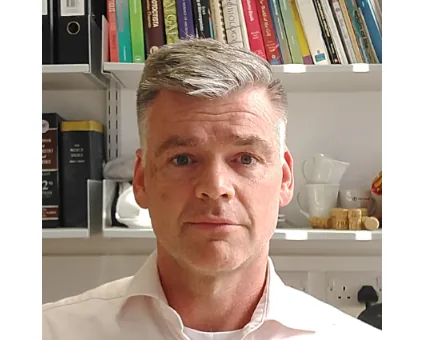
Professor Mark van der Giezen
Drs, PhD, SFHEA
Professor and Associate Director Research & Knowledge Exchange
Directorate




Professor Mark van der Giezen joins the University of Greenwich as Professor and Associate Director of the Natural Resources Institute (NRI), leading the Institute’s portfolio in research and knowledge exchange. He is an internationally recognised microbiologist with a long-standing interest in anaerobic microbial eukaryotes, their evolution, and their role in human and animal health. Over his career, Mark has developed a strong interdisciplinary profile, working across microbiology, One Health, food systems, diagnostics, and translational research.
Before joining NRI, Mark spent six years at the University of Stavanger, Norway, where he played a key role in strengthening links between the university and the local university hospital, generating significant external research income, and developing collaborations with local livestock veterinarians and an innovative diagnostics company. During this period, he also led substantial improvements to the MSc Biological Chemistry curriculum, resulting in enhanced student satisfaction, clearer assessments, and new research-led teaching approaches. Prior to his time in Norway, Mark held academic positions at Queen Mary University of London and the University of Exeter, where he contributed to curriculum design, research-led education, and interdisciplinary research programmes.
Mark is widely known for his research on anaerobic mitochondria, the evolution of eukaryotes in low-oxygen environments, and the biology of intestinal protists such as Blastocystis, Entamoeba histolytica and Giardia intestinalis. He has published over 90 scientific works, primarily peer-reviewed papers, but also book chapters and conference proceedings, including publications in leading journals such as Nature, Current Biology and eLife, and his research has been cited more than 7,000 times. His collaborations span Europe and beyond, including long-standing partnerships with the Statens Serum Institute (Denmark), Cefas, Rothamsted Research, and clinical and veterinary diagnostic laboratories.
He has supervised numerous PhD students to completion and serves on national and international panels, including the Royal Society of Biology’s Advanced Accreditation Assessment Panel. Mark is also active in science communication and public engagement, having organised Nobel Prize seminars, Pint of Science events, and multiple outreach activities.
Mark’s research focuses on the biology and evolution of anaerobic microbial eukaryotes, particularly intestinal protists found in humans and animals. He is interested in how these organisms adapt biochemically to low-oxygen environments, how they interact with bacterial communities, and how they influence host health. His work combines evolutionary biology, microbiome research, parasitology, molecular ecology, and diagnostic development.
He has a strong interest in One Health approaches, especially how human, livestock, and environmental microbiomes intersect with food safety, sustainable agriculture, and global health. Mark finds emerging gut-on-a-chip technologies, metabolomics, and host–microbe modelling particularly exciting as tools to deepen understanding of microbial interactions.
At NRI, he will contribute to One Health and food-systems-related research groups, building interdisciplinary connections between microbiology, diagnostics, sustainable agriculture, and global development.
The value of his work lies in its ability to connect fundamental evolutionary questions with applied challenges in health, agriculture, and diagnostics. Future work aims to improve understanding of protist–bacteria interactions, enhance diagnostic accuracy, and integrate microbiome research into sustainable food production systems.
1. The Role of Blastocystis in Inflammatory Bowel Disease (NFR 324516)
This project investigates whether the common intestinal protist Blastocystis contributes to, protects against, or is simply associated with inflammatory bowel disease (IBD). Using a population cohort of more than 5,000 individuals and a 400-patient clinical cohort, the research addresses the long-standing question of whether Blastocystis should be considered pathogenic. Early findings suggest host–microbe interactions are more complex than assumed, challenging clinical dogma and informing diagnostic decision-making. Future research will explore strain-level diversity, metabolomic profiles and mechanistic effects via gut-on-a-chip systems.
2. Mitochondrial Glycolysis as a Drug Target in Pathogenic Stramenopiles (NFR 301170)
This project focuses on the discovery of a predicted mitochondrial metabolite transporter essential for pathogens that run part of glycolysis inside mitochondria, an unusual metabolic adaptation found in certain stramenopiles. The study aims to validate this transporter experimentally and assess its potential as a selective therapeutic target. Findings to date support the presence of a unique metabolic route absent in hosts, highlighting opportunities for targeted drug development. Future work will combine structural biology, inhibitor screening and evolutionary genomics to explore intervention strategies.
3. PREDICTOM: AI-Driven Early Screening for Alzheimer’s Disease (EU IHI 101132356)
PREDICTOM develops an integrated platform for early detection of cognitive decline by combining at-home sampling, digital cognitive testing and AI-driven biomarker analysis across a large European cohort. The project addresses the need for scalable, non-invasive early screening tools capable of identifying individuals at risk long before clinical symptoms appear. Initial results show strong potential for digital markers and biosignatures to enhance predictive accuracy. Future research will focus on validation in diverse populations and integration into clinical pathways.
4. Gut Health in European Lobsters: Microbiome Indicators for Aquaculture
In collaboration with Cefas, the National Lobster Hatchery and academic partners, this project investigated the gut microbiome of European lobsters to determine whether microbial profiles can serve as indicators of health in offshore sea-cage aquaculture. The research addressed challenges in monitoring early signs of stress, disease and environmental impact in high-value crustacean production. Results revealed distinct microbiome signatures associated with health status, providing promising markers for routine monitoring. Future work will focus on validating biomarkers across sites, understanding environmental drivers and integrating microbiome tools into sustainable aquaculture practices.
Postgraduate Research
Mark has supervised eight PhD students to completion and is currently supervising several others across microbiology, parasitology, microbiome research and One Health. His doctoral students work on projects ranging from anaerobic eukaryotic cell biology to host–microbe interactions, diagnostics innovation and microbiome ecology. Many of his graduates now hold positions in academia, clinical laboratories, public health institutes and industry. Mark also co-supervises international doctoral candidates through collaborative networks involving hospitals, national research institutes and industry partners.
Mark has a long track record of delivering and leading teaching in areas highly relevant to NRI’s work. He has taught undergraduate microbiology at Queen Mary University of London, the University of Exeter and the University of Stavanger, and has extensive experience integrating research-led approaches into his teaching. At postgraduate level, he taught Sustainable Livestock and Fisheries on the MSc Food Security and Sustainable Agriculture programme at Exeter, and later developed and led the Sustainable Future Foods module at Stavanger.
He has served as Study Programme Director for several BSc and MSc programmes, leading curriculum innovation, enhancing student experience and strengthening links between teaching, research and industry. His knowledge-transfer activities have involved collaboration with hospitals, diagnostic companies, veterinarians and industry partners, helping students and researchers connect academic work to real-world challenges.
Before joining NRI, Mark held a wide range of leadership and citizenship roles at his previous universities, including programme directorships at both BSc and MSc level, curriculum leadership, and membership of the Royal Society of Biology’s Advanced Accreditation Assessment Panel. He has served as a PhD examiner and assessor across several institutions and has been active in public engagement, founding an Annual Science Day, organising Nobel Prize seminars and coordinating Pint of Science events, while also supporting national scientific societies.
Mark looks forward to contributing similar academic citizenship, leadership and engagement activities within the University of Greenwich and NRI community.
Mark is a Senior Fellow of the Higher Education Academy (UK) and a member of the Royal Society of Biology’s Advanced Accreditation Assessment Panel. He previously held an EMBO Fellowship and has served in scientific society leadership as President and board member of the Norwegian Society for Microbiology, and as a board member of the Scandinavian-Baltic Society for Parasitology.
He has acted as external examiner for numerous PhD vivas across several countries and has reviewed grant applications for many national and international funding agencies. Mark has also served on assessment panels for professorial promotions at multiple international universities. In addition, he has been an invited speaker and organiser for major public-engagement activities, including Nobel Prize seminars and Pint of Science, and he contributes regularly to editorial and peer-review work for leading journals.
Seyoum, Y., de Lucia, C., Khalifa, K., Bergland, A.K., Aarsland, D. and van der Giezen, M. (2025) Gut enterotype- and body mass index (BMI)-dependent effects of anthocyanin supplementation on gut microbiota composition in individuals at risk for cognitive decline: a randomized placebo-controlled trial. Gut Microbes, 17 (1). https://doi.org/10.1080/19490976.2025.2570862
Vanhatalo, A., L’Heureux, J.E., Black, M.I., Blackwell, J.R., Aizawa, K., Thompson, C., Williams, D.W., van der Giezen, M., Winyard, P.G. and Jones, A.M. (2025) Ageing modifies the oral microbiome, nitric oxide bioavailability and vascular responses to dietary nitrate supplementation. Free Radical Biology and Medicine, 238, pp. 682–696.
Záhonová, K., Low, R.S., Warren, C.J., Cantoni, D., Herman, E.K., Yiangou, L., Ribeiro, C.A., Phanprasert, Y., Brown, I.R., Rueckert, S., Baker, N.L., Tachezy, J., Betts, E.L., Gentekaki, E., van der Giezen, M., Clark, C.G., Jackson, A.P., Dacks, J.B. and Tsaousis, A. (2023) Evolutionary analysis of cellular reduction and anaerobicity in the hyper-prevalent gut microbe Blastocystis. Current Biology, 33, pp. 2449–2464.e8.
Herman, E.K., Greninger, A., van der Giezen, M., Ginger, M., Ramirez-Macias, I., Miller, H., Morgan, M., Tsaousis, A., Velle, K., Vargová, R., Záhonová, K., Najle, S.R., MacIntyre, G., Muller, N., Wittwer, M., Zysset-Burri, D., Elias, M., Slamovits, C., Weirauch, M., Fritz-Laylin, L., Marciano-Cabral, F., Puzon, G., Walsh, T., Chiu, C. and Dacks, J.B. (2021) Genomics and transcriptomics yields a systems-level view of the biology of the pathogen Naegleria fowleri. BMC Biology, 19, p. 142.
Holt, C.C., Bass, D., Stentiford, G.D. and van der Giezen, M. (2020) Understanding the role of the shrimp gut microbiome in health and disease. Journal of Invertebrate Pathology, 186, p. 107387.
Gentekaki, E., Curtis, B.A., Stairs, C.W., Klimeš, V., Eliáš, M., Salas-Leiva, D.E., Herman, E.K., Eme, L., Arias, M.C., Henrissat, B., Hilliou, F., Klute, M.J., Suga, H., Malik, S.-B., Pightling, A.W., Kolisko, M., Rachubinski, R.A., Schlacht, A., Soanes, D.M., Tsaousis, A.D., Archibald, J.M., Ball, S.G., Dacks, J.B., Clark, C.G., van der Giezen, M. and Roger, A.J. (2017) Extreme genome diversity in the hyper-prevalent parasitic eukaryote Blastocystis. PLoS Biology, 15 (9), p. e2003769.
Müller, M., Mentel, M., van Hellemond, J.J., Henze, K., Woehle, C., Gould, S.B., Yu, R.Y., van der Giezen, M., Tielens, A.G. and Martin, W.F. (2012) Biochemistry and evolution of anaerobic energy metabolism in eukaryotes. Microbiology and Molecular Biology Reviews, 76, pp. 444–495.
Tovar, J., León-Avila, G., Sánchez, L., Sutak, R., Tachezy, J., van der Giezen, M., Hernández, M., Müller, M. and Lucocq, J.M. (2003) Mitochondrial remnant organelles of Giardia function in iron–sulphur protein maturation. Nature, 426, pp. 172–176.
Professor Mark van der Giezen joins the University of Greenwich as Professor and Associate Director of the Natural Resources Institute (NRI), leading the Institute’s portfolio in research and knowledge exchange. He is an internationally recognised microbiologist with a long-standing interest in anaerobic microbial eukaryotes, their evolution, and their role in human and animal health. Over his career, Mark has developed a strong interdisciplinary profile, working across microbiology, One Health, food systems, diagnostics, and translational research.
Before joining NRI, Mark spent six years at the University of Stavanger, Norway, where he played a key role in strengthening links between the university and the local university hospital, generating significant external research income, and developing collaborations with local livestock veterinarians and an innovative diagnostics company. During this period, he also led substantial improvements to the MSc Biological Chemistry curriculum, resulting in enhanced student satisfaction, clearer assessments, and new research-led teaching approaches. Prior to his time in Norway, Mark held academic positions at Queen Mary University of London and the University of Exeter, where he contributed to curriculum design, research-led education, and interdisciplinary research programmes.
Mark is widely known for his research on anaerobic mitochondria, the evolution of eukaryotes in low-oxygen environments, and the biology of intestinal protists such as Blastocystis, Entamoeba histolytica and Giardia intestinalis. He has published over 90 scientific works, primarily peer-reviewed papers, but also book chapters and conference proceedings, including publications in leading journals such as Nature, Current Biology and eLife, and his research has been cited more than 7,000 times. His collaborations span Europe and beyond, including long-standing partnerships with the Statens Serum Institute (Denmark), Cefas, Rothamsted Research, and clinical and veterinary diagnostic laboratories.
He has supervised numerous PhD students to completion and serves on national and international panels, including the Royal Society of Biology’s Advanced Accreditation Assessment Panel. Mark is also active in science communication and public engagement, having organised Nobel Prize seminars, Pint of Science events, and multiple outreach activities.
Mark’s research focuses on the biology and evolution of anaerobic microbial eukaryotes, particularly intestinal protists found in humans and animals. He is interested in how these organisms adapt biochemically to low-oxygen environments, how they interact with bacterial communities, and how they influence host health. His work combines evolutionary biology, microbiome research, parasitology, molecular ecology, and diagnostic development.
He has a strong interest in One Health approaches, especially how human, livestock, and environmental microbiomes intersect with food safety, sustainable agriculture, and global health. Mark finds emerging gut-on-a-chip technologies, metabolomics, and host–microbe modelling particularly exciting as tools to deepen understanding of microbial interactions.
At NRI, he will contribute to One Health and food-systems-related research groups, building interdisciplinary connections between microbiology, diagnostics, sustainable agriculture, and global development.
The value of his work lies in its ability to connect fundamental evolutionary questions with applied challenges in health, agriculture, and diagnostics. Future work aims to improve understanding of protist–bacteria interactions, enhance diagnostic accuracy, and integrate microbiome research into sustainable food production systems.
1. The Role of Blastocystis in Inflammatory Bowel Disease (NFR 324516)
This project investigates whether the common intestinal protist Blastocystis contributes to, protects against, or is simply associated with inflammatory bowel disease (IBD). Using a population cohort of more than 5,000 individuals and a 400-patient clinical cohort, the research addresses the long-standing question of whether Blastocystis should be considered pathogenic. Early findings suggest host–microbe interactions are more complex than assumed, challenging clinical dogma and informing diagnostic decision-making. Future research will explore strain-level diversity, metabolomic profiles and mechanistic effects via gut-on-a-chip systems.
2. Mitochondrial Glycolysis as a Drug Target in Pathogenic Stramenopiles (NFR 301170)
This project focuses on the discovery of a predicted mitochondrial metabolite transporter essential for pathogens that run part of glycolysis inside mitochondria, an unusual metabolic adaptation found in certain stramenopiles. The study aims to validate this transporter experimentally and assess its potential as a selective therapeutic target. Findings to date support the presence of a unique metabolic route absent in hosts, highlighting opportunities for targeted drug development. Future work will combine structural biology, inhibitor screening and evolutionary genomics to explore intervention strategies.
3. PREDICTOM: AI-Driven Early Screening for Alzheimer’s Disease (EU IHI 101132356)
PREDICTOM develops an integrated platform for early detection of cognitive decline by combining at-home sampling, digital cognitive testing and AI-driven biomarker analysis across a large European cohort. The project addresses the need for scalable, non-invasive early screening tools capable of identifying individuals at risk long before clinical symptoms appear. Initial results show strong potential for digital markers and biosignatures to enhance predictive accuracy. Future research will focus on validation in diverse populations and integration into clinical pathways.
4. Gut Health in European Lobsters: Microbiome Indicators for Aquaculture
In collaboration with Cefas, the National Lobster Hatchery and academic partners, this project investigated the gut microbiome of European lobsters to determine whether microbial profiles can serve as indicators of health in offshore sea-cage aquaculture. The research addressed challenges in monitoring early signs of stress, disease and environmental impact in high-value crustacean production. Results revealed distinct microbiome signatures associated with health status, providing promising markers for routine monitoring. Future work will focus on validating biomarkers across sites, understanding environmental drivers and integrating microbiome tools into sustainable aquaculture practices.
Postgraduate Research
Mark has supervised eight PhD students to completion and is currently supervising several others across microbiology, parasitology, microbiome research and One Health. His doctoral students work on projects ranging from anaerobic eukaryotic cell biology to host–microbe interactions, diagnostics innovation and microbiome ecology. Many of his graduates now hold positions in academia, clinical laboratories, public health institutes and industry. Mark also co-supervises international doctoral candidates through collaborative networks involving hospitals, national research institutes and industry partners.
Mark has a long track record of delivering and leading teaching in areas highly relevant to NRI’s work. He has taught undergraduate microbiology at Queen Mary University of London, the University of Exeter and the University of Stavanger, and has extensive experience integrating research-led approaches into his teaching. At postgraduate level, he taught Sustainable Livestock and Fisheries on the MSc Food Security and Sustainable Agriculture programme at Exeter, and later developed and led the Sustainable Future Foods module at Stavanger.
He has served as Study Programme Director for several BSc and MSc programmes, leading curriculum innovation, enhancing student experience and strengthening links between teaching, research and industry. His knowledge-transfer activities have involved collaboration with hospitals, diagnostic companies, veterinarians and industry partners, helping students and researchers connect academic work to real-world challenges.
Before joining NRI, Mark held a wide range of leadership and citizenship roles at his previous universities, including programme directorships at both BSc and MSc level, curriculum leadership, and membership of the Royal Society of Biology’s Advanced Accreditation Assessment Panel. He has served as a PhD examiner and assessor across several institutions and has been active in public engagement, founding an Annual Science Day, organising Nobel Prize seminars and coordinating Pint of Science events, while also supporting national scientific societies.
Mark looks forward to contributing similar academic citizenship, leadership and engagement activities within the University of Greenwich and NRI community.
Mark is a Senior Fellow of the Higher Education Academy (UK) and a member of the Royal Society of Biology’s Advanced Accreditation Assessment Panel. He previously held an EMBO Fellowship and has served in scientific society leadership as President and board member of the Norwegian Society for Microbiology, and as a board member of the Scandinavian-Baltic Society for Parasitology.
He has acted as external examiner for numerous PhD vivas across several countries and has reviewed grant applications for many national and international funding agencies. Mark has also served on assessment panels for professorial promotions at multiple international universities. In addition, he has been an invited speaker and organiser for major public-engagement activities, including Nobel Prize seminars and Pint of Science, and he contributes regularly to editorial and peer-review work for leading journals.
Seyoum, Y., de Lucia, C., Khalifa, K., Bergland, A.K., Aarsland, D. and van der Giezen, M. (2025) Gut enterotype- and body mass index (BMI)-dependent effects of anthocyanin supplementation on gut microbiota composition in individuals at risk for cognitive decline: a randomized placebo-controlled trial. Gut Microbes, 17 (1). https://doi.org/10.1080/19490976.2025.2570862
Vanhatalo, A., L’Heureux, J.E., Black, M.I., Blackwell, J.R., Aizawa, K., Thompson, C., Williams, D.W., van der Giezen, M., Winyard, P.G. and Jones, A.M. (2025) Ageing modifies the oral microbiome, nitric oxide bioavailability and vascular responses to dietary nitrate supplementation. Free Radical Biology and Medicine, 238, pp. 682–696.
Záhonová, K., Low, R.S., Warren, C.J., Cantoni, D., Herman, E.K., Yiangou, L., Ribeiro, C.A., Phanprasert, Y., Brown, I.R., Rueckert, S., Baker, N.L., Tachezy, J., Betts, E.L., Gentekaki, E., van der Giezen, M., Clark, C.G., Jackson, A.P., Dacks, J.B. and Tsaousis, A. (2023) Evolutionary analysis of cellular reduction and anaerobicity in the hyper-prevalent gut microbe Blastocystis. Current Biology, 33, pp. 2449–2464.e8.
Herman, E.K., Greninger, A., van der Giezen, M., Ginger, M., Ramirez-Macias, I., Miller, H., Morgan, M., Tsaousis, A., Velle, K., Vargová, R., Záhonová, K., Najle, S.R., MacIntyre, G., Muller, N., Wittwer, M., Zysset-Burri, D., Elias, M., Slamovits, C., Weirauch, M., Fritz-Laylin, L., Marciano-Cabral, F., Puzon, G., Walsh, T., Chiu, C. and Dacks, J.B. (2021) Genomics and transcriptomics yields a systems-level view of the biology of the pathogen Naegleria fowleri. BMC Biology, 19, p. 142.
Holt, C.C., Bass, D., Stentiford, G.D. and van der Giezen, M. (2020) Understanding the role of the shrimp gut microbiome in health and disease. Journal of Invertebrate Pathology, 186, p. 107387.
Gentekaki, E., Curtis, B.A., Stairs, C.W., Klimeš, V., Eliáš, M., Salas-Leiva, D.E., Herman, E.K., Eme, L., Arias, M.C., Henrissat, B., Hilliou, F., Klute, M.J., Suga, H., Malik, S.-B., Pightling, A.W., Kolisko, M., Rachubinski, R.A., Schlacht, A., Soanes, D.M., Tsaousis, A.D., Archibald, J.M., Ball, S.G., Dacks, J.B., Clark, C.G., van der Giezen, M. and Roger, A.J. (2017) Extreme genome diversity in the hyper-prevalent parasitic eukaryote Blastocystis. PLoS Biology, 15 (9), p. e2003769.
Müller, M., Mentel, M., van Hellemond, J.J., Henze, K., Woehle, C., Gould, S.B., Yu, R.Y., van der Giezen, M., Tielens, A.G. and Martin, W.F. (2012) Biochemistry and evolution of anaerobic energy metabolism in eukaryotes. Microbiology and Molecular Biology Reviews, 76, pp. 444–495.
Tovar, J., León-Avila, G., Sánchez, L., Sutak, R., Tachezy, J., van der Giezen, M., Hernández, M., Müller, M. and Lucocq, J.M. (2003) Mitochondrial remnant organelles of Giardia function in iron–sulphur protein maturation. Nature, 426, pp. 172–176.