


Value Chain Analysis for Development (VCA4D) is a programme funded by the EU Directorate for International Partnerships (DG-INTPA), and implemented by Agrinatura, the European Alliance for Agricultural Knowledge for Development. At the request of European Union Delegations in different countries of the Global South, VCA4D conducts studies of selected agricultural commodities, examining the entire value chain from production through transport and processing to final sale or export. For each value chain, studies of the economic, social and environmental aspects (known as “domains”) ask:
- Does the value chain contribute to economic growth?
- Is that growth inclusive?
- Is the value chain socially sustainable (in terms of working conditions, gender equality, food security of producers, etc.)?
- Is the value chain environmentally sustainable (in terms of carbon emissions, other environmental impacts, impacts on biodiversity)?
Besides providing a 5-person Project Management Unit in Brussels, NRI provides individual staff to participate in VCA4D studies, as economists, social sector specialists, and environmentalists.
Since 2020, VCA4D has entered its second phase, during which NRI staff have contributed to nine new value chain studies. These include social analyses of fish (Tanzania), milk (Burundi), cashmere and pine nut (Mongolia), and poultry (French Pacific territories). They also include economic analyses of coffee and cocoa in Tanzania and Sierra Leone, and an environmental analysis of the cocoa value chain in Sierra Leone.
Phase II has seen VCA4D evolve in several new directions. NRI staff were involved in each of the examples described below.
Geographical reach
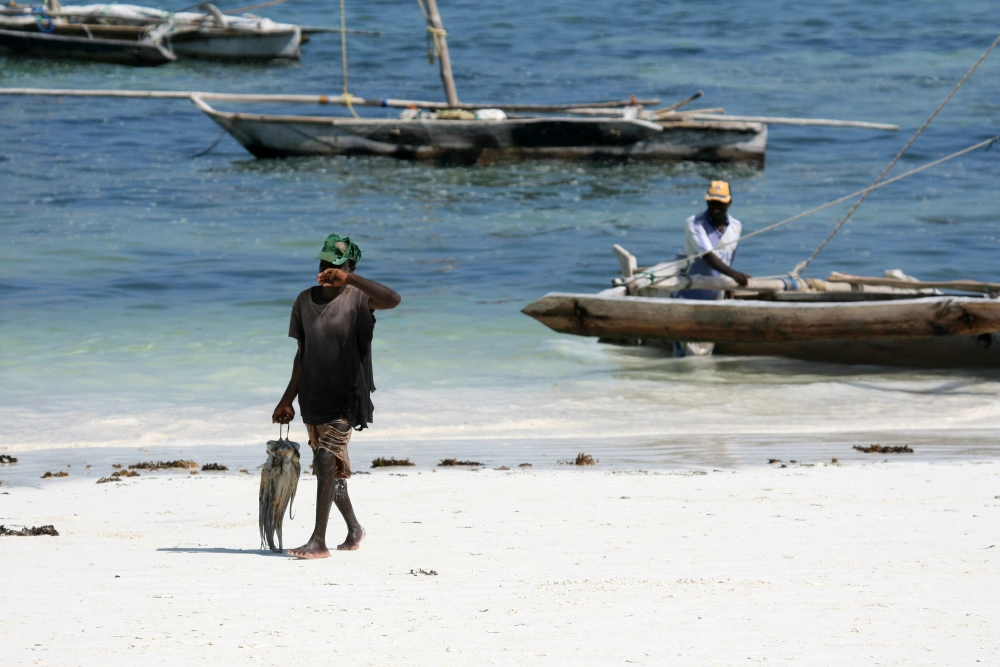
The new studies included for the first time EU accession candidates (e.g. Moldova wheat, maize and sunflower), and another post-socialist country, Mongolia, where VCA4D studies of cashmere and pinenuts were conducted. It also included one of the EU’s Overseas Countries and Territories, the French Pacific Territories, for a study on poultry. There has also been an increased emphasis on Francophone Africa, including studies on the milk value chain in Burundi and groundnuts in Madagascar.
New models for VCA4D studies
Phase I studies were implemented by a team of three international specialists, covering respectively the economic, social and environmental domains, assisted by a national consultant working across all three domains. Some Phase II studies have expanded this model. In Burundi, additional bilateral EU funds were leveraged to mobilise a national consultant for each domain and allow for large-scale primary data collection. Two of those national consultants have gone on to work as international team members in other countries. In Moldova, national consultants were also mobilised for each domain, working with three international specialists and additional resource people to study the wheat value chain. The national consultants then went on independently to produce further studies of maize and sunflower.
Enhanced dissemination
VCA4D has organised five workshops in Phase II, (Nigeria - maize, Tanzania – fish, coffee, Burundi – milk, Mongolia – cashmere) to encourage discussion of the findings, engaging not only EU representatives and government agencies but also farmers, herders, the private sector, civil society and NGOs, banks, and other donors.
Synthesis studies
In 2022, VCA4D commissioned several synthesis studies, comparing VCA4D findings on specific issues across value chains and across countries. Seven NRI staff co-authored six papers covering land tenure, livestock, private investment, productivity improvements for staple food crops, food processing, and agroecology. These studies were then presented at a specially organised workshop in Brussels in January 2023, and some are being adapted for publication in academic journals. For example, the study on context, governance and risk in beef value chains in Eswatini and Zimbabwe was published in Review of Agricultural, Food and Environmental Studies, 2025.
Training materials
VCA4D has prioritised the drafting of materials for training prospective international and national consultants in methods for studying the three domains. In March 2025, four social sector specialists, including an NRI’s Professor John Morton, participated in a week-long workshop to generate training materials for the three domains. NRI staff have also received training in AFA, the software used in VCA4D economic analyses. The VCA4D management team has commissioned animated videos to introduce the programme, its objectives and methodologies, and a “serious game” to demonstrate the usefulness of VCA4D studies to policy makers.
VCA4D Phase III, which started this year, is designed to further strengthen a pool of expertise on the three domains, pilot the use of different combinations of national and international consultants, and increase the dissemination and impact of VCA4D findings.