


Public health challenges are more interconnected than ever. The risks we face today are influenced by the complex interactions between people, animals, and the environments we share. Addressing these challenges demands integrated approaches that recognise these connections.
At NRI, researchers are advancing a One Health approach that brings together expertise across ecology, agriculture, public health and social science. Their work highlights a simple but powerful idea: improving health outcomes depends on understanding – and managing – the systems that connect human, animal, and environmental wellbeing.
Understanding the ecology of disease vectors
A key strand of NRI’s work focuses on the ecology and behaviour of disease vectors. Research led by NRI’s Dr Frances Hawkes demonstrates how understanding the life cycles and behaviours of insects such as mosquitoes and blackflies can unlock more effective strategies for disease control.
This includes work on malaria, where agricultural systems, such as irrigated rice cultivation, can unintentionally create ideal breeding environments for mosquitoes. Through studying how farming practices affect vector ecology, researchers are helping to identify opportunities to reduce vector populations while supporting food production.
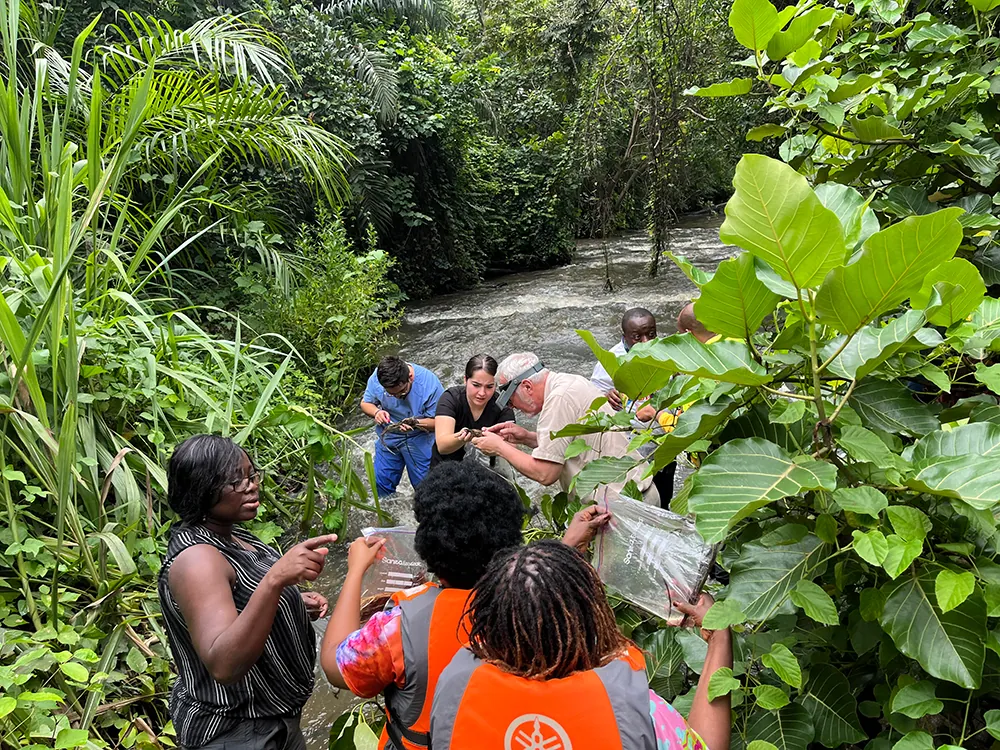
Dr Hawkes and her colleagues are also developing improved surveillance methods for blackfly vectors of river blindness, a neglected tropical disease, by exploiting their host-seeking and egg-laying behaviour. This work directly supports the World Health Organization's elimination framework for the disease. Neglected tropical diseases (NTDs) are a diverse group of over 20 infectious conditions associated with devastating health and socio-economic consequences, and mostly prevalent in impoverished tropical communities. NTDs affect over a billion people worldwide.
Researchers are also contributing to new ways of understanding how diseases spread. In a recent study, scientists, including NRI’s Dr Don Reynolds, revealed that mosquitoes can travel at high altitudes (up to 290m), carrying pathogens such as dengue and West Nile viruses over long distances. This finding challenges conventional assumptions about how diseases spread and has significant implications for outbreak prevention and management.
In parallel, recent work led by NRI PhD student Ainhoa Rodriguez-Pereira reviewed lesser-understood aspects of mosquito biology, including the function of the crop (a reservoir primarily for sugary meals like nectar before they are released into the midgut for digestion), highlighting its roles in mosquito digestion, immunity and fitness. Further research on this topic could open up new avenues for vector control.
Tackling neglected diseases
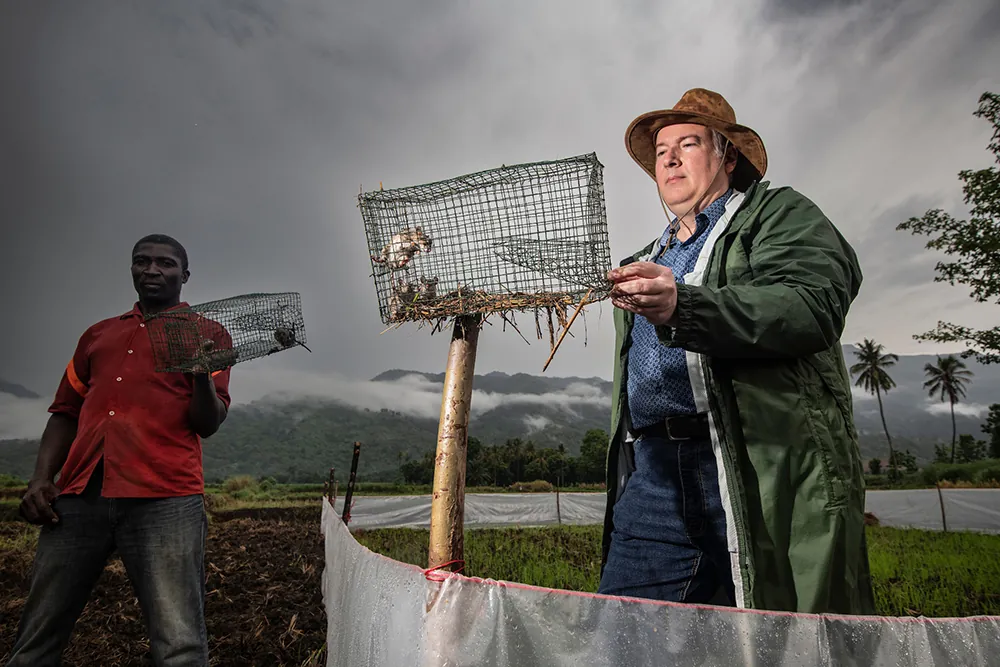
Besides river blindness, NRI’s work also contributes to global efforts to address other NTDs. Research involving Professor Steven Belmain and partners highlights the need for coordinated action that addresses the environmental and social drivers of disease transmission.
Field studies in Tanzania and Madagascar show how community-led interventions can play a critical role. Intensive, coordinated rodent trapping has been shown to significantly reduce rodent populations and the fleas that transmit diseases such as plague. These findings demonstrate that locally grounded, evidence-based strategies can deliver tangible health benefits while remaining practical for communities to sustain.
This work further underscores that disease risk is also shaped by housing conditions, agricultural practices, and patterns of human–animal interaction, reinforcing the need for holistic, interdisciplinary responses.
Food systems and zoonotic risk
Food systems are another critical interface between human and environmental health. Research led by Professor Delia Grace explores the complex relationship between wild meat consumption, nutrition, and zoonotic disease risk.
For an estimated 400 million people in Sub-Saharan Africa and Southeast Asia, wild meat is a vital source of food and income. Yet it can also create pathways for disease transmission, particularly during hunting, handling and processing. Rather than advocating blanket bans, this research highlights the need to improve food safety in ways that protect both public health and livelihoods.
By examining risks across the entire value chain, this work demonstrates how more nuanced, context-sensitive approaches can reduce the likelihood of disease spillover while supporting food security.
Inequality and the disease risk
Across this work, a consistent pattern emerges: health risks are not always equally distributed. It is this question that NRI PhD student Rosalia Joseph’s research sets out to investigate, whether and how structural inequalities shape who faces the greatest risk from malaria, and who can access protection.
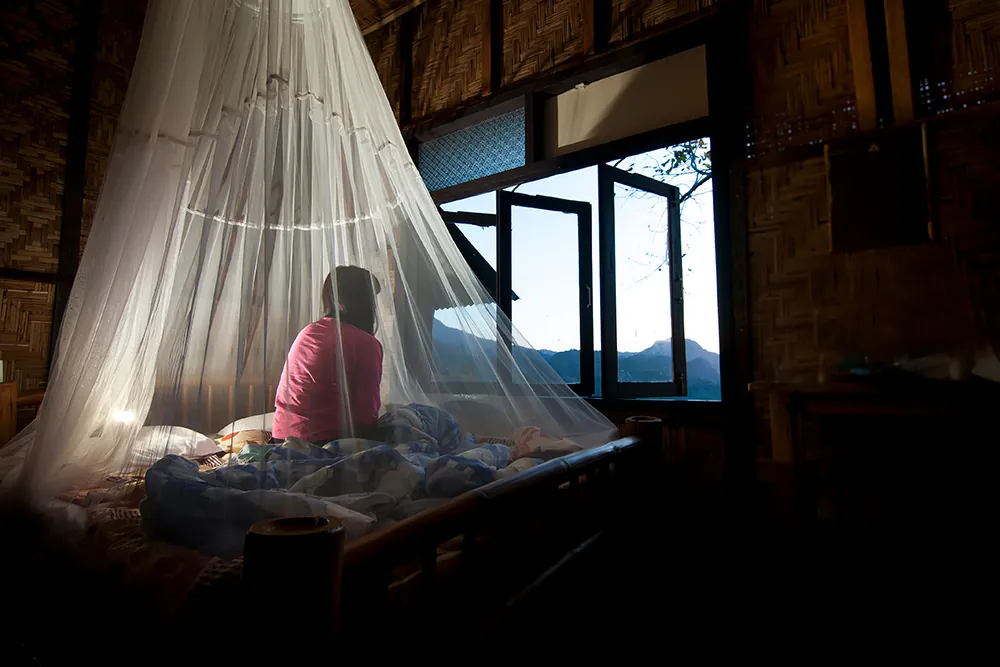
Specifically, her research examines how power relations in global malaria governance shape whose needs are prioritised in policy and programmes, how decisions about malaria prevention and care are negotiated within households, including the often invisible roles of domestic workers in malaria caregiving, and how structural barriers shape the way different individuals and populations experience and navigate malaria services. Through molecular entomological methods that identify the biological sex of the human host a mosquito fed on, Rosalia is investigating whether mosquitoes feed disproportionately on male or female household members, integrating biological evidence of sex-specific exposure with social and political analysis.
By integrating molecular, social, and policy evidence, this research aims to unpack whether and how gendered power relations, intra-household dynamics, and governance structures are likely to influence malaria prevention and response activities. It also seeks to identify where gaps exist between who policies claim to prioritise, how households make decisions about protection, and which individuals and populations are genuinely able to benefit from malaria services in practice.
Integrated solutions for better public health
Taken together, NRI’s work demonstrates that addressing global health challenges requires a shift in perspective. Effective responses must integrate ecological insight, social understanding and community engagement.
Through interdisciplinary research and global partnerships, NRI is helping develop approaches and systems that support the health and resilience of people, animals and ecosystems alike.