

Reducing food loss and waste is crucial to building sustainable and resilient food systems. However, effective loss reduction depends on a clear understanding of where, when and why losses happen. For pulses (e.g., beans, chickpeas, lentils and peas), this understanding is limited, even in regions where these crops play a vital role in diets, incomes and soil health.
Research at NRI, led by Professor Tanya Stathers in collaboration with research colleagues in Africa, has involved exploration of the postharvest systems of cowpeas, common beans, groundnuts (peanuts) in several sub-Saharan African countries. This work examines not only how much food is lost post-harvest, but also the extent, causes and activity stages during which losses occur.
Studies that measure food postharvest losses (PHLs) in sub-Saharan African countries have tended to focus on cereals, particularly maize, and mainly explored the losses occurring during storage. When working to expand the focus of the African Postharvest Losses Information System (APHLIS), to include loss estimates for key legumes (e.g. cowpeas, common beans, groundnuts) and root and tuber crops (e.g. cassava, sweetpotato) of importance in African diets and economies, a critical gap became clear. Professor Stathers and her colleagues realised that there was not enough robust data to generate reliable loss estimates for these crops. They needed to conduct measured loss assessment studies to understand the extent and causes of the losses occurring.
One such study was conducted in Benin, in collaboration with researchers at the National Institute of Agricultural Research (INRAB). Focusing on cowpeas and groundnuts under smallholder-managed systems, the research explored both the extent of PHLs and their underlying causes. These crops are vital sources of dietary protein for local communities and also generate crucial household income through market sales.
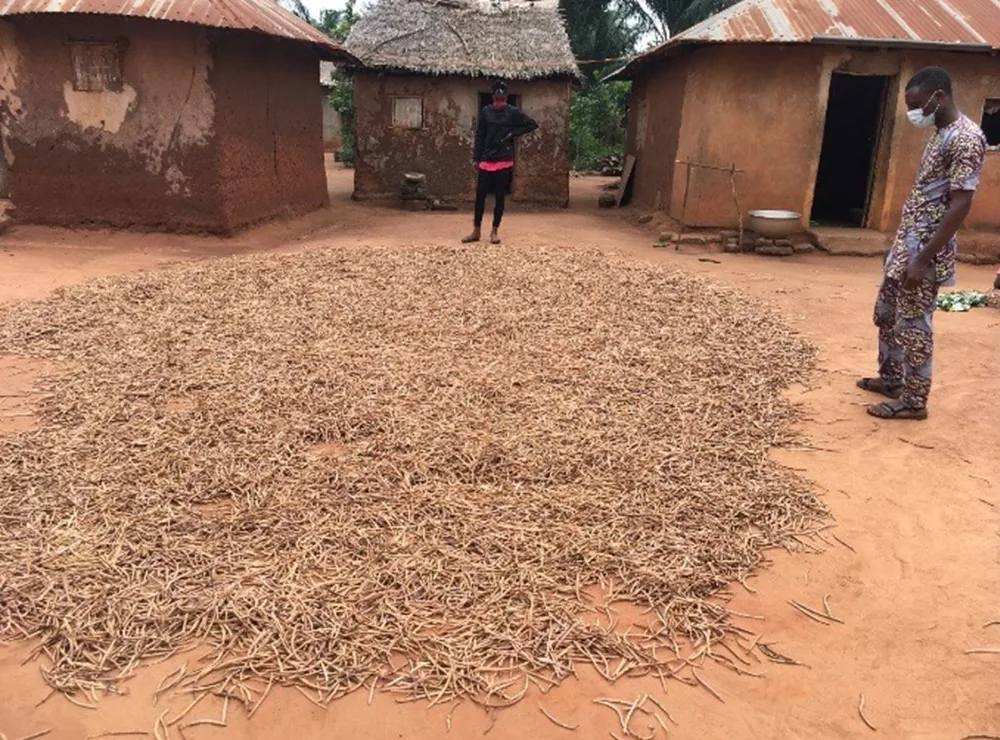
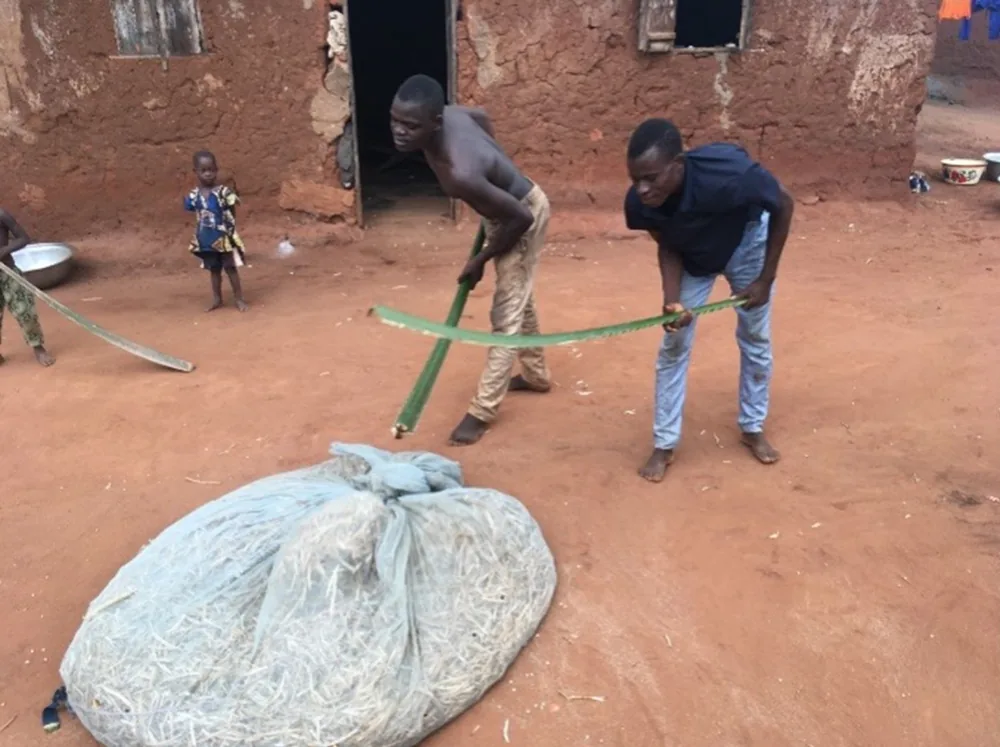
Through two years detailed fieldwork in Benin, the study found that farming households lost 19-22% of their cowpea between harvest and the end of six months of storage. The highest proportions of these losses occur during harvesting, pod drying, threshing and storage activities. Rainfall during the harvesting and/or drying, poor threshing methods, labour shortages, storage insect pest attack and rotting contributed to the problem. These findings provide the basis for targeted participatory action research with farming households and other key stakeholders to address the causes of high losses during these activities.
Complementing the field studies, earlier laboratory work, examined and modelled how insect infestation during storage affects the nutritional value of stored cowpeas. The study shows how nutrient content of insect-infested stored grain depends on grain type, infesting insect and infestation level, with implications for human nutrition beyond grain weight loss.
Multiple interventions to reduce postharvest losses in different crops have been developed and tested. However, they have not always been designed or evaluated with the involvement of the farming households and other value chain actors expected to use them. To support and inform evidence-based decision-making, Professor Stathers and her team recently systematically scoped and synthesised all the existing research evidence on PHL reduction interventions, for 22 crops across 57 countries in sub-Saharan Africa and South Asia.
This review assessed the technical efficacy of the different interventions and examined the limited evidence on their social, economic and environmental outcomes. Five legumes – beans, cowpea, chickpea, pigeon pea and groundnut – were included. Legumes emerged as the least studied crop group overall, and the legume loss reduction interventions that had been studied, predominantly focused on storage methods, particularly in cowpeas.
Alongside this synthesis, interviews with stakeholders in Ethiopia, Nigeria, Kenya and Malawi explored experiences and perspectives of PHL reduction interventions and the associated drivers, enablers, barriers and opportunities.
Pulses play an essential role in supplying dietary protein worldwide. With growing global interest and investment in protein diversification ─ to help reduce meat and dairy consumption and their associated environmental and health impacts ─ the role of pulses in diets and nutrition, and the multiple opportunities for reducing the high PHLs occurring along the value chains of these important crops must not be overlooked.