

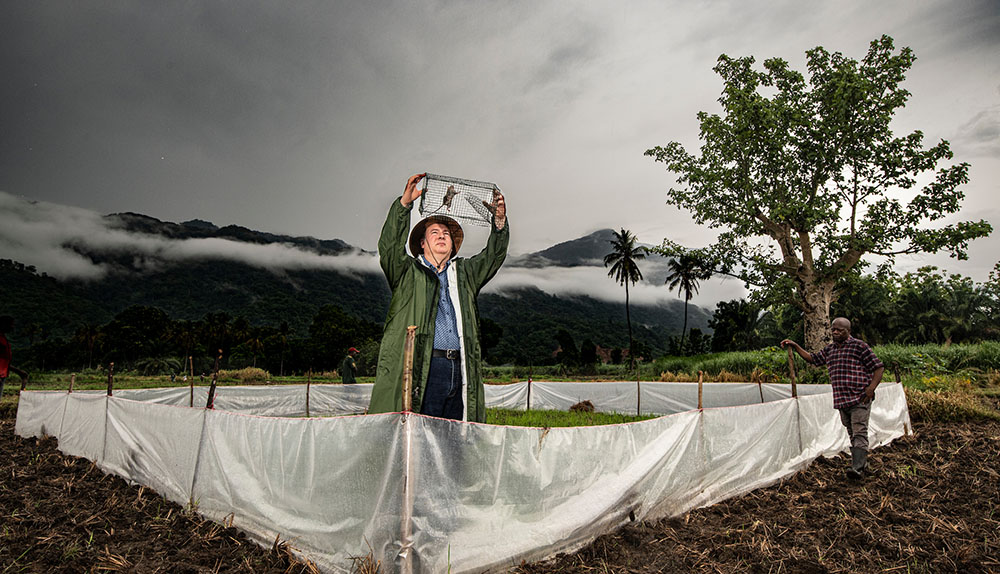
Recent NRI-led research has shown that intensive rodent trapping can dramatically reduce rodent populations while also lowering the abundance of plague-carrying fleas inside homes, challenging previous concerns that trapping could increase disease risk. The findings provide promising new evidence for sustainable, One Health approaches to rodent management that could help protect public health, improve food security and support rural livelihoods.
Rodents are a known public health threat, emblematic of poverty, hardship and epidemics. The WHO estimates that 400 million human cases of rodent-borne infections occur every year. At least 60 zoonotic infections involve rodents at some stage of their cycle, and some, such as plague, can develop into human-to-human disease outbreaks. Leptospirosis alone is one of the world’s most common but neglected zoonoses, with an estimated 1 million cases and 60,000 fatalities each year, and chronic impacts that can lead to food insecurity and long-term indebtedness.
Disease risk from rodents depends on the abundance of infected animals and the individual, household and community practices that influence exposure. The different transmission routes of rodent-borne infections, including via ectoparasite (fleas, ticks, lice, mites) vectors and environmental contamination, have important implications for epidemiology and human exposure. Mitigating risk, therefore, requires an understanding of both disease ecology at landscape scales and the nature of human-animal interactions within social contexts.
Tackling such complex problems requires a multi-disciplinary, One Health approach, bringing together fields of social anthropology, microbiology, ecology and wildlife management. The interdisciplinary NRI-led RedRoz project developed rodent control strategies that effectively reduce the threat from rodents and are sustainable for local communities in heterogeneous landscapes.
NRI’s Professor Steven Belmain, an international expert on rodent management, led project efforts to understand seasonal population dynamics of rodents. His work focuses on how these dynamics relate to local agricultural and household practices, especially the ecology of rodent dispersal and reproduction.
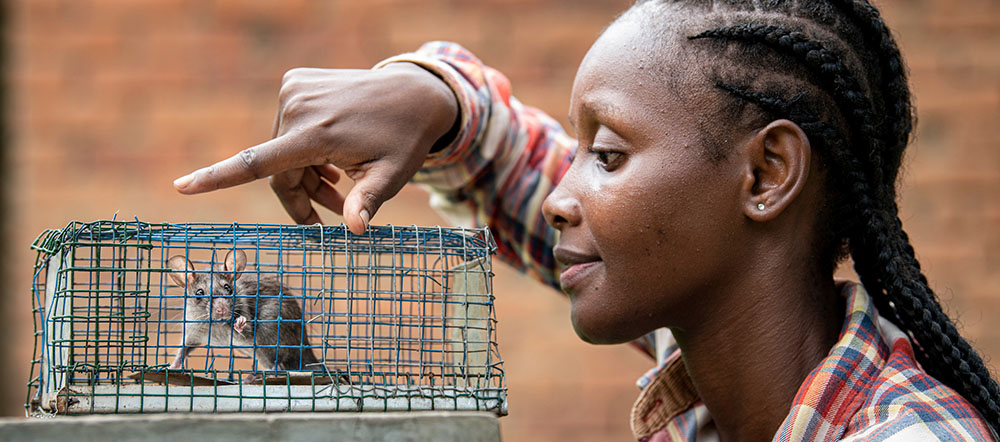
A key activity of this research was trapping rodents in households and other areas around rural communities. The work was empirically designed in two regions of Tanzania and Madagascar, where intensive trapping was conducted in six communities in each country. The impact of this continuous trapping by every household, every day of the year, was compared to activities in six other communities where households’ use of rodenticides was typically infrequent and ad hoc.
During the period that intervention communities were being assisted in daily trapping, Professor Belmain and the wider team collected samples from rodents for laboratory tests for diseases, particularly plague, leptospirosis and typhus. The researchers used marked baits to track how rodents moved around, particularly between houses and cropping areas, to understand how rodents and the diseases they carry can spread to humans and other animals.
Preliminary data analysis from the project shows that intensive trapping by communities can dramatically reduce rodent numbers and keep numbers low, as long as the community keeps trapping. In contrast, communities that did not coordinate their actions and only occasionally used rodenticides saw high rodent numbers year-round. Families in intervention communities noticed immediate benefits. They had very few rats in their houses, which meant less disturbance during sleep and fewer bites at night. Fewer children had nightmares about rats biting them and food stores inside houses were not being eaten or contaminated by rats.
Another positive result from the research is that intensive rat trapping did not cause potential problems with fleas spreading plague. The ecology of flea species dynamics is complex in the context of plague transmission, and knowledge is lacking at the global scale. Some experts have previously argued that rat trapping could increase human plague cases.
Professor Belmain explained: ‘Our research has shown the opposite, demonstrating that removing rats through intensive trapping also reduced flea abundance inside houses, particularly the key flea species known to have a higher incidence of plague infection. Although these findings are promising, more analysis is needed to understand whether the intensive rat trapping actually reduces the incidence of diseases in the rodent population, thereby reducing the risk of diseases spilling over to humans.’
This project was implemented in collaboration with researchers from the UK (NRI, University of Aberdeen, St. Andrews University), Tanzania (Sokoine University of Agriculture and Muhimbili University of Health and Allied Sciences) and Madagascar (Vahatra Association and the Pasteur Institute).