

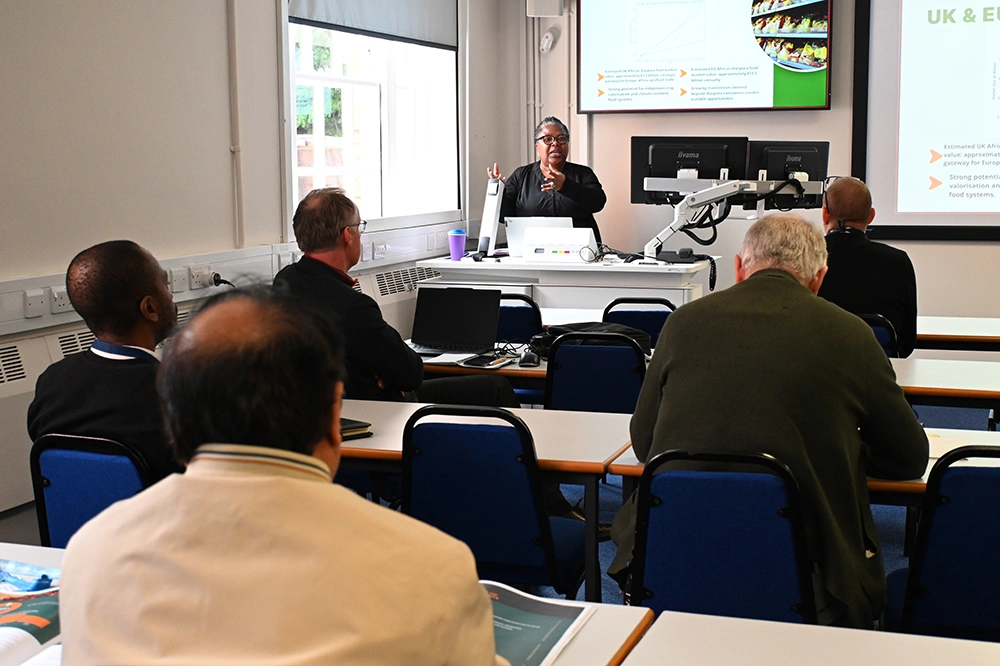
NRI researchers and students played a prominent role in this year’s University of Greenwich Research Culture Week, contributing to discussions and activities spanning food systems, biodiversity, public health, entrepreneurship, decolonising research and community engagement.
Held across the university, Research Culture Week brought together researchers, students, external partners and industry representatives to explore how research can foster collaboration, innovation and societal impact across disciplines and communities.
NRI’s contributions reflected the breadth of the institute’s work and its commitment to interdisciplinary, inclusive and impact-focused research.
One session explored the growing importance of African diaspora food systems (the sourcing-trade-consumption networks of African food in the diaspora) in the UK and Europe through a presentation of a new report examining the UK African food market, commissioned by the Global Forum on Agricultural Innovation and Research (GFAiR). Presented by Maureen Duru of Foodbridge vzw, the session highlighted how African food systems are shaping conversations around sustainable food systems, biodiversity, trade and cultural connectivity.
The study estimated the UK African diaspora food market to be worth approximately £1.5 billion annually and argued that the sector should be recognised not as a niche market, but as a rapidly evolving and strategically important component of the wider food economy. The report also highlighted how African diaspora food systems contribute to food diversity, healthier dietary patterns and economic opportunities while strengthening links between Europe and Africa.
Questions around participation, plurality and knowledge creation also featured during the week. In a panel discussion on decolonising research and knowledge exchange, researchers reflected on the development of the Vice Chancellor’s PhD Scholarship project exploring decolonising soil science and participatory research in Belize.
The session brought together PhD scholar, Chelsea Frutos, and supervisory team – Dr Arlette Saint Ville (University of the West Indies) and NRI’s Dr Marcos Peradelo Perez and Dr June Po to discuss how research partnerships can be built through co-learning, mutual respect and community engagement. Discussions explored both the opportunities and challenges involved in decolonising research practices and highlighted the importance of building equitable relationships between researchers, communities and institutions. These experiences and lessons learned were valuable to those exploring decolonising research creation as supervisors, researchers and external partners.
Community participation and multi-actor engagement were central themes in another interactive workshop exploring how researchers, policymakers, communities and Indigenous movements navigate increasingly complex environmental and societal challenges. Participants discussed the growing importance of transdisciplinary approaches that embrace plural forms of knowledge, justice, participation and environmental stewardship.
Another session focused on innovation and sustainable food systems. Dr Andrew Spicer, founder and Chief Technology Officer of Algenuity, explored the potential of microalgae as a sustainable food ingredient capable of reshaping future food systems. Algenuity has previously collaborated with NRI and specialises in using microalgae as a sustainable and highly functional plant-based protein for the global food industry.
The session highlighted microalgae-based ingredients are being translated into real food applications, and how microalgae could support more climate-resilient and sustainable food production through nutrient-rich, low-impact alternatives for food manufacturing and plant-based innovation. The discussion formed part of broader conversations over the week around future-facing food innovation and sustainability.
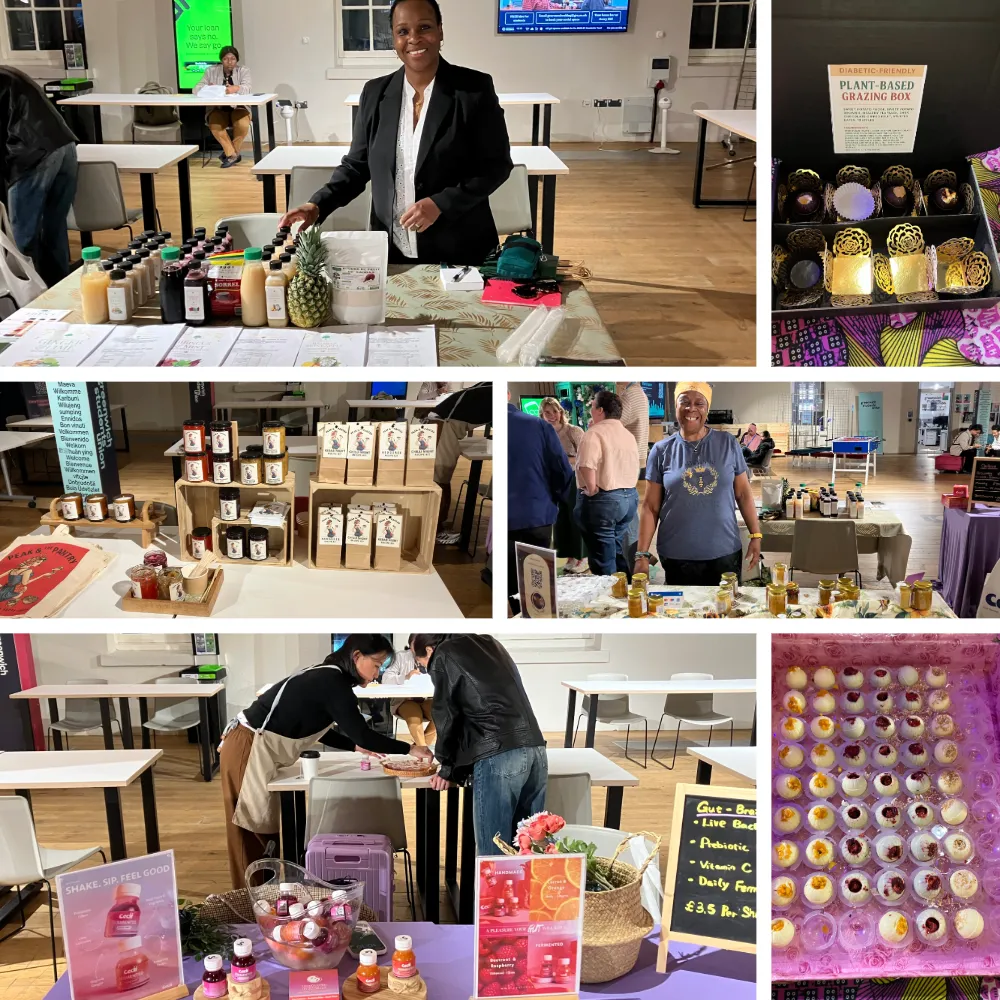
NRI’s commitment to entrepreneurship and applied innovation was further demonstrated through a two-day food business showcase at the Greenwich campus. The showcase brought together startups supported through the NRI Food Accelerator Programme, offering visitors the opportunity to engage directly with founders of companies developing innovative food products including sustainable snacks, functional foods, international flavours and healthy beverages.
The event highlighted the role universities can play in supporting entrepreneurship, collaboration and knowledge exchange by connecting researchers, businesses and communities. It also demonstrated the impact of the NRI Food Accelerator Programme in helping emerging businesses develop ideas into market-ready products.
Research Culture Week also provided a platform for NRI staff and postgraduate researchers to showcase research tackling complex global challenges.
During the postgraduate research culture showcase, PhD researcher Md Rafiqul Islam presented research examining fisheries conservation in Bangladesh through a social-ecological systems lens. His work explores how ecological conservation goals interact with livelihoods, governance, debt and enforcement systems, highlighting the importance of systems thinking in understanding conservation challenges and transformative change.
PhD researcher Rose Joseph shared research examining how gender and social inequalities shape malaria exposure, protection and care. Combining molecular biology, medical entomology and social science approaches, her work sparked discussions around why malaria elimination remains uneven globally and how environmental, social and structural factors influence disease outcomes differently across communities.
Staff research posters also reflected NRI’s global research portfolio. Professor Maruthi Gowda’s poster highlighted work focused on identifying cassava varieties resistant to cassava mosaic disease to support long-term solutions for farmers in Africa. Dr Barbara Tiddi’s poster focused on her research exploring how passive acoustic monitoring can support amphibian conservation efforts for critically endangered species.
Throughout the week, NRI researchers contributed to conversations that extended beyond disciplinary boundaries, reflecting the increasingly collaborative and interconnected nature of research addressing global challenges. NRI’s participation also highlighted how research culture is strengthened through collaboration, inclusivity and engagement with communities beyond academia.