

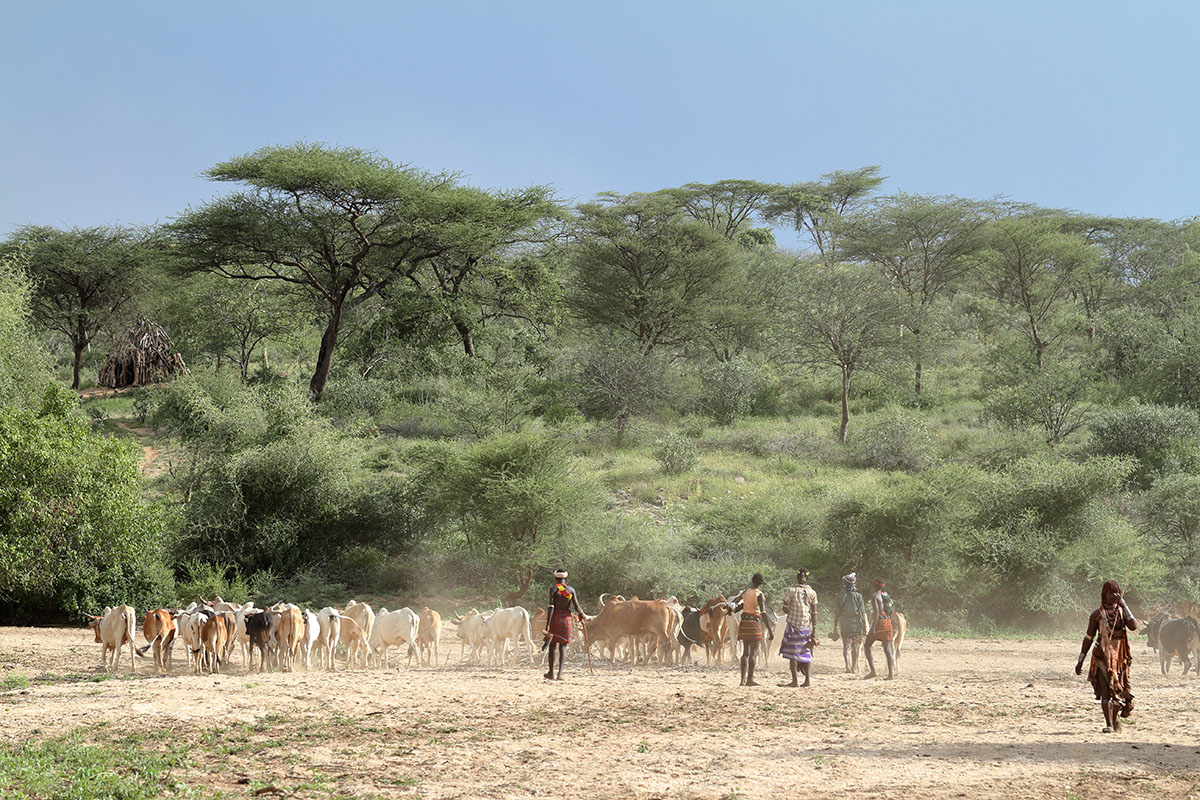
Researchers at the Natural Resources Institute (NRI) have secured nearly £1 million in funding to lead a three-year international research project to identify, evaluate and co-develop pathways for scaling Nature-based Solutions (NbS) to strengthen climate resilience, conserve biodiversity, and improve livelihoods in Ethiopia's drylands.
Running from July 2026 to June 2029, the project will bring together communities, policymakers, researchers and the private sector across Ethiopia's Central Rift Valley (CRV) to co-produce new scientific evidence, decision support tools, and practical guidance. These outputs will help scale NbS and support more resilient, biodiversity-friendly and sustainable land management, with lessons applicable to dryland landscapes across Ethiopia and beyond.
The CRV is one of Ethiopia's most climate-vulnerable dryland regions. Increasingly erratic rainfall, recurrent droughts, water scarcity, land degradation and biodiversity loss are placing growing pressure on farming and pastoral communities in the CRV, whose livelihoods depend on healthy ecosystems. These pressures are being intensified by unsustainable land use and increasing competition for land and water.
NbS are actions to protect, restore and sustainably manage ecosystems to address societal challenges while delivering benefits for both people and nature. They work with natural processes to enhance biodiversity, strengthen climate resilience and support sustainable livelihoods.
However, important knowledge gaps remain. These include understanding which NbS provide the greatest long-term benefits, where and under what conditions they can be successfully scaled, how they perform across different dryland landscapes, and how potential trade-offs between biodiversity, climate resilience and livelihoods can be anticipated and managed. There is also a need for robust methodological frameworks and evidence-based approaches to help stakeholders identify, evaluate and effectively scale the most appropriate NbS across different landscapes.
The project will combine long-term environmental, climate, biodiversity and socio-economic data from global repositories, satellite observations, government agencies and research partners with new evidence collected through participatory field research and stakeholder engagement. These diverse data sources will be integrated and utilised to co-develop and validate a System Dynamics Model (SDM) – a computer-based simulation that captures the interactions between ecosystems, farming systems, climate and livelihoods. The SDM will be used to explore future scenarios and identify which NbS work best, where and under what conditions they can be effectively scaled, while maximising co-benefits and minimising trade-offs.
The project is an international partnership including the Alliance of Bioversity International and CIAT, Haramaya University, Ethiopian government agencies, local communities and an Ethiopian private-sector partner. NRI's interdisciplinary team includes Dr Mofa Islam (Associate Professor of Food Security, Environment and Development), John Morton (Professor of Development Anthropology), Jeremy Haggar (Professor of Agroecology), Dr Truly Santika (Associate Professor in Environmental Geography) and Dr Huiyi Yang (Fellow in Agri-environmental Modelling).
A key distinguishing factor of the project is its approach to scaling NbS. Rather than simply demonstrating that they can be effective, it will explore how, where and under what conditions they can be expanded to maximise benefits for biodiversity, climate resilience and livelihoods while minimising potential trade-offs.
Dr Mofa Islam, Principal Investigator of the project, said: 'Nature-based Solutions (NbS) have enormous potential to help tackle some of the biggest climatic, environmental, and social challenges facing dryland regions. While there is growing evidence that they can work, they are still not being adopted at the scale needed. This is because we still don't fully understand which NbS work best in delivering co-benefits for climate resilience, biodiversity conservation, and livelihoods over the long term and under changing conditions; how these benefits can be shared fairly across different social groups; and how best to assess these impacts to inform policy and investment decisions. We are delighted to receive this award, which will enable us to work closely with our partners and local communities in Ethiopia to address these critical gaps together and support more effective scaling of NbS across Ethiopia's drylands, while generating lessons for other dryland regions facing similar challenges.'
The project will strengthen collaboration between researchers, communities, policymakers and the private sector while generating new evidence on which NbS work best across different farming systems and landscapes. The findings will support more effective policies, investments and sustainable landscape management in Ethiopia's drylands, with lessons that can inform NbS in other dryland regions worldwide.
This research is funded by the UK’s Department for Environment, Food and Rural Affairs (Defra) through the Global Centre on Biodiversity for Climate (GCBC) programme, supported by UK International Climate Finance.