
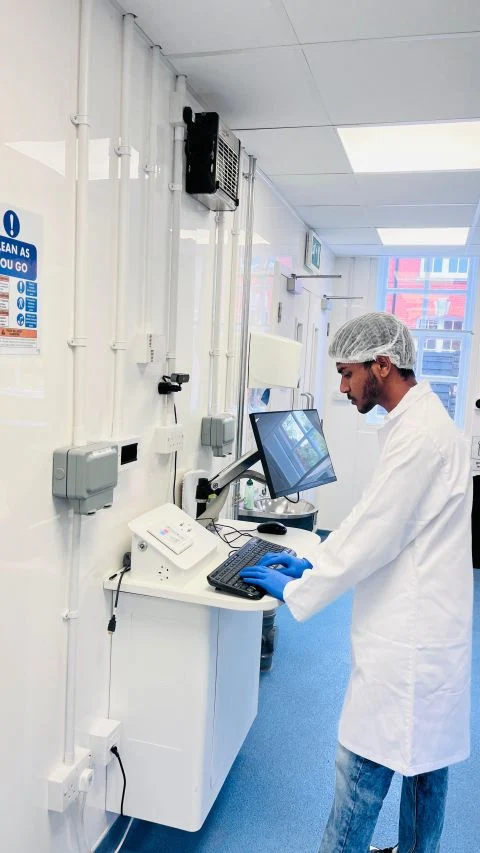
How do you turn an idea for a new food product into something nutritious, appealing and safe? For Srivathsa Kumbaji, studying the MSc Food Innovation with Industrial Practice at NRI at the University of Greenwich is helping him explore that question in the classroom, the research laboratory and the workplace.
Currently undertaking his industrial placement as a Quality Assurance (QA) Operative at Frive, a UK chilled ready-to-eat food company, Srivathsa’s work combines food safety, quality management and new product development. His experience shows how the MSc connects academic learning with the practical demands of the food industry.
Learning by doing
Srivathsa came to NRI after completing a bachelor’s degree in food nutrition in India. Interested in the relationship between food science, nutrition and wellbeing, he wanted to understand how innovative products could be developed to be both nutritious and appealing to consumers.
‘The MSc Food Innovation with Industrial Practice programme combines academic learning with practical industry experience,’ he explained. ‘I felt the programme would help me build on my undergraduate background and develop the practical skills needed for a career in food quality assurance and new product development.’
One of the highlights of his studies was his dissertation, which focused on developing gluten-free bread using watermelon rind flour. The project investigated how a food by-product could be used as a functional ingredient, while considering factors such as nutrition, texture, sensory qualities and product formulation.
Taking the idea from initial research through product development and evaluation helped Srivathsa build confidence in his research and practical skills. ‘Studying at NRI
has not only developed my technical knowledge but also helped me understand how food innovation can address wider issues such as sustainability, food waste and healthier diets,’ he added.
Applying knowledge in industry
At Frive, Srivathsa’s responsibilities include ensuring that products are safe, consistent and meet quality standards. He also contributes to compliance management and audit preparation. For example, he is developing audit checklists for Good Hygiene Practices (GHP) and glass and hard plastics.
‘The placement has complemented my MSc really well,’ he said. ‘It has enabled me to apply what I learned during my studies in a real food manufacturing environment. At university, I learned the theory behind food safety, HACCP, quality management and product development. At Frive, I see how these areas work together in day-to-day production.’
His work also extends beyond quality assurance. He supports kitchen and factory product trials, participates in taste panels, collects samples for laboratory testing and helps check product labels, ingredients and allergen information before launch.
This collaboration with new product development and process technology teams has helped him understand the intricacies of moving a product from an idea to full-scale production, where consistency, shelf life and food safety all matter.
Srivathsa has also completed professional certifications through his placement, including Level 3 qualifications in HACCP, food safety, and health and safety – strengthening his technical skills.
Looking ahead
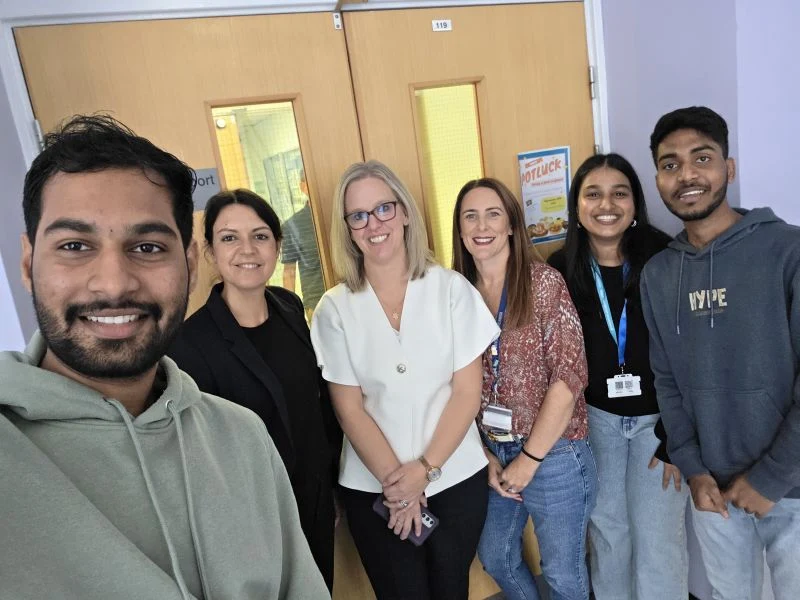
The combination of research and workplace experience has helped Srivathsa identify the kind of career he wants to pursue. He hopes to work in new product development, quality assurance or a role combining the two, with a particular interest in sustainable ingredients and healthier food products. Longer term, he is also considering a PhD in food innovation.
For prospective students, he believes the opportunity to explore different areas of the food industry is one of the programme’s strengths. ‘Be open-minded. You may start the course thinking you want to work in one area, but through projects, research and placement experience, you may discover new interests,’ he advises.
‘My advice to anyone considering the programme would be to make the most of every opportunity. Get involved in practical projects, ask questions, build relationships with academic staff and use the placement to explore what area of the food industry you enjoy most,’ he recommends. ‘The MSc has helped me build my technical knowledge and confidence and has given me a much clearer direction for my future career.’