

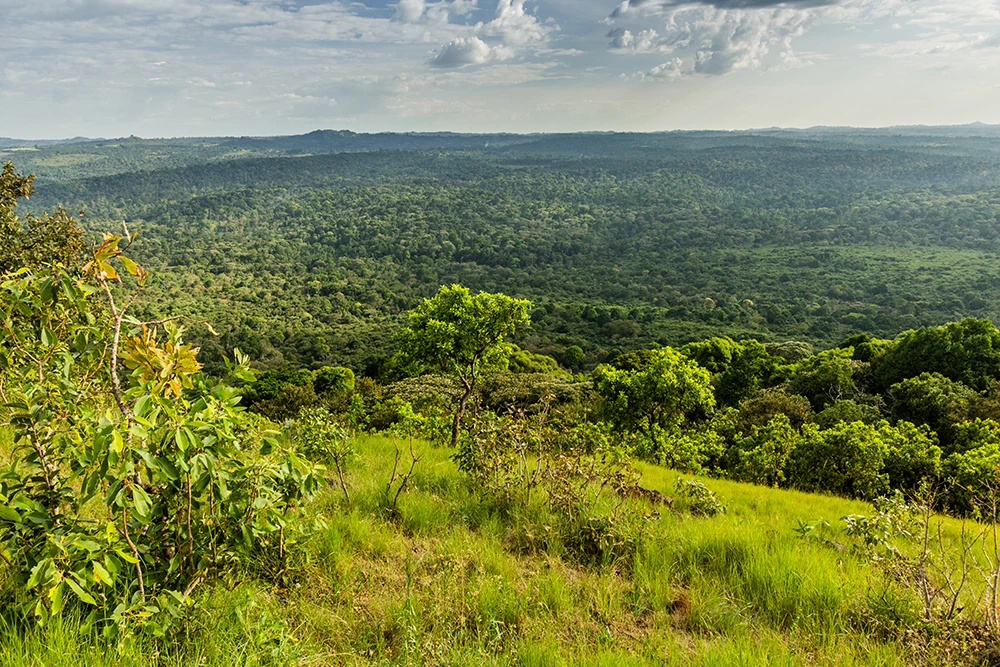
PhD researchers within NRI’s Political Ecology and Culture Research Group are reshaping how we understand our relationships with the natural world. Working at the cutting edge of political ecology and critical geography, these emerging scholars are bringing fresh insight into ‘more‑than‑human’ research – an approach that recognises animals, plants, landscapes, technologies, and ecological systems as active participants in social and political life.
The researchers are asking bold questions about how humans and non-humans live together, shape each other, and navigate a rapidly changing planet. More-than-human research represents imaginative environmental research - research that places human and non-human communities at the centre of shared planetary well-being.
At the heart of this work is relationality – the idea that humans do not stand apart from nature but are deeply entangled with the environments and species around them. Political ecology provides the analytical lens through which these relationships are examined. It draws attention to questions of power, access, and justice: whose voices – human or otherwise – are heard, who benefits from certain forms of environmental governance, and who bears the weight of ecological harm.
Below, the researchers share more about their work
Rye Hickman
Rye is a PhD researcher with the UK Food Systems Centre for Doctoral Training at NRI, University of Greenwich, partnered with Rothamsted Research.
Research focus
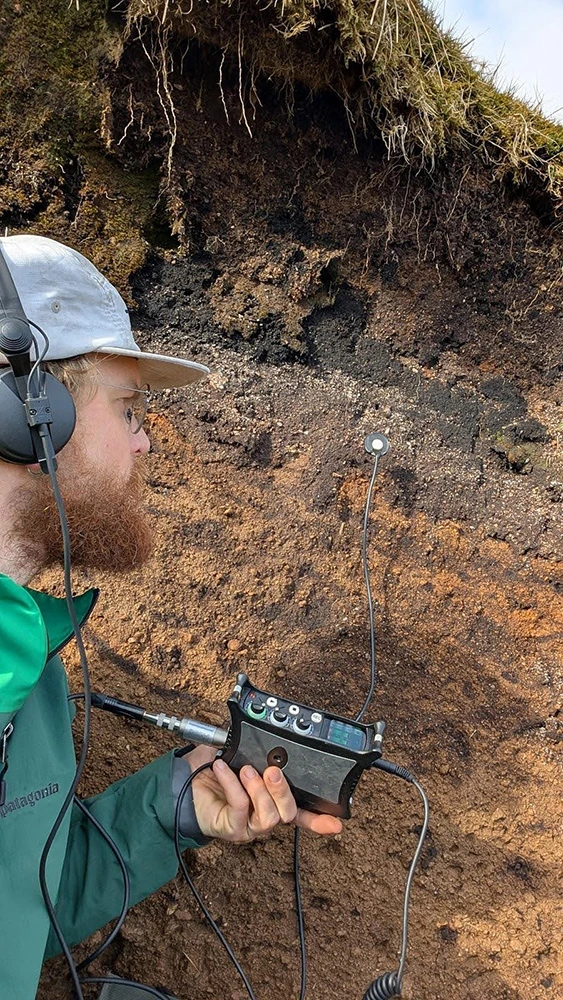
Rye’s research explores soil as a more-than-human community as opposed to a resource for production. By bringing political ecology, relational theory and soil science into conversation with the creative arts, the project investigates soils as living, relational ecologies. The research aims to broaden ideas of soil and its care beyond measurement and extraction, toward more ethical, multispecies forms of stewardship and care.
Methods
Ethnographic fieldwork is combined with experimental arts-based methods, including soil bioacoustics recordings, soil chromatography, and sensory “soil listening” workshops.
Current work
Over the past year, Rye has run soil listening workshops with farmers, agricultural actors, and non-agricultural groups such as fashion designers using sound to explore soil liveliness and (soil as a living entity with its own life, rhythms and ‘logic’ different from human life). These workshops, along with the ethnographic research, are informing a set of creative soil “celebrations”– bringing people together to discuss and imagine scenarios of how more-than-human soil communities might develop if soils and soil organisms were better represented in decision-making.
Collaborations
Rye is collaborating with Resonating Fields (an arts–ecology collective co-founded by Rye) and Devon farmers in co-designing workshops and public engagement events.
Niall Readfern
Niall is a PhD researcher at NRI working within the EU Horizon project, Transformative Change for Biodiversity and Equity (TCforBE).
Research focus
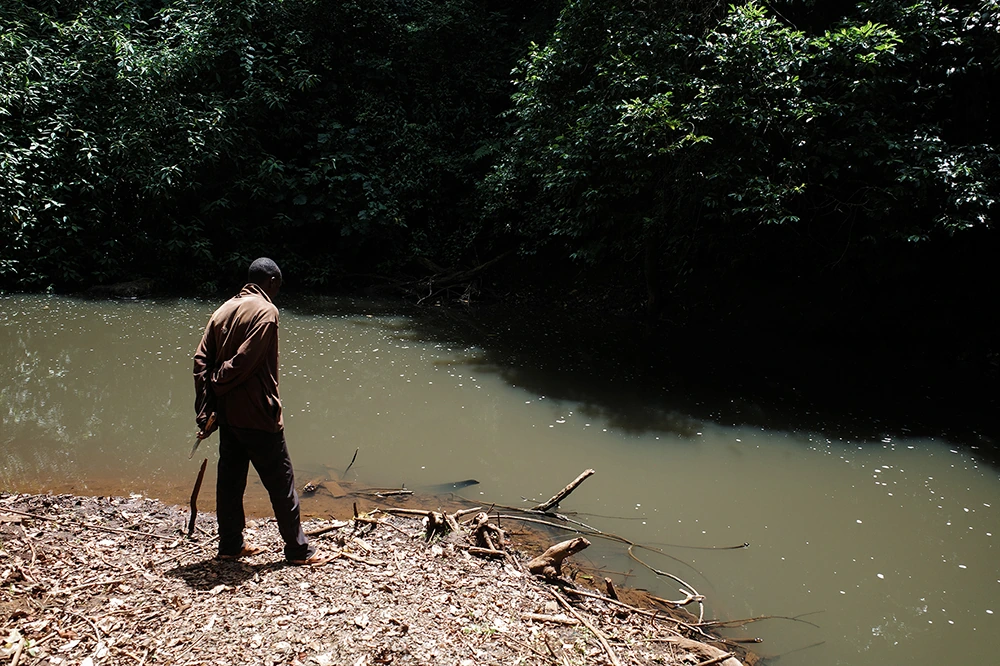
His research examines environmental change in Kenya’s Mau Forest, a landscape shaped by overlapping conservation regimes, smallholder agriculture, and global commodity markets such as tea. It explores how different ways of knowing and valuing the forest coexist and interact, producing multiple, sometimes conflicting, understandings of what the forest is and what it should become. This work engages broader questions of socio-ecological transformation, relationality, and political ontology.
Methods
The research combines mixed methods, including household surveys and key informant interviews, with more relational and creative approaches such as walking interviews, body-mapping, and participatory workshops. These are brought together through a relational mapping methodology that traces the connections between people, places, and other-than-human life.
Current work
The project has involved extensive fieldwork across communities at the edge of the Mau Forest, generating a substantial mixed-methods dataset. Current work is focused on analysis and the development of relational maps that synthesise these materials into new forms of socio-ecological insight. Early results show that changes in the landscape are not linear but emerge through entangled, coexisting and enduring modes of world-making.
Collaborations
The research is conducted in collaboration with Kenyan partners, the University of Kabianga, and engages with artistic collaborators, Kairos Futura, to co-develop further experimental outputs that extend beyond conventional academic formats.
Lachlan Kenneally
Lachlan is a third-year PhD researcher with the UK Food Systems Centre for Doctoral Training at the University of Greenwich
Research focus
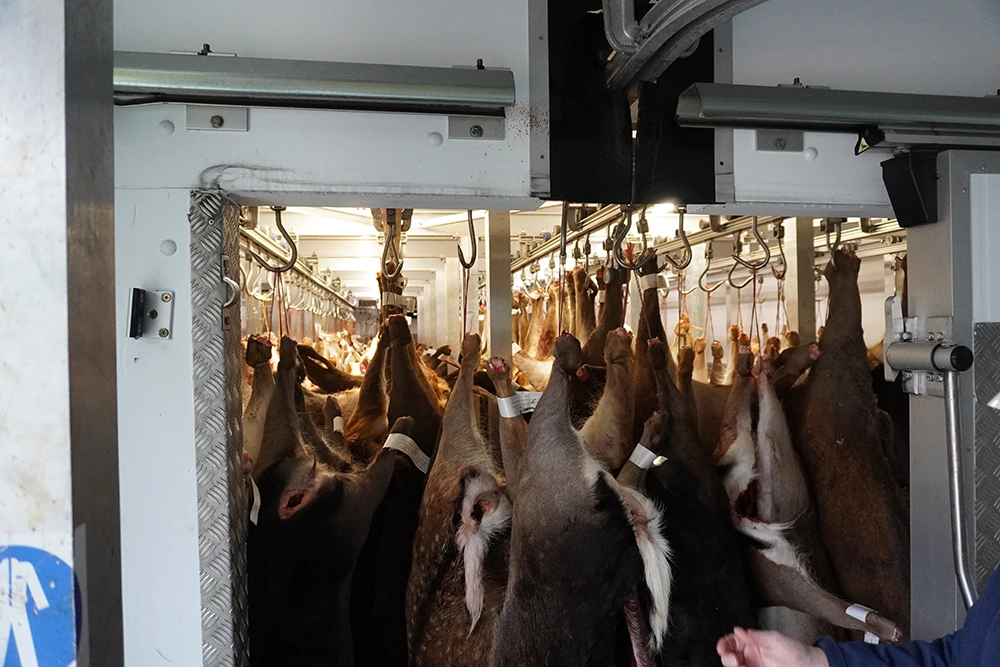
His research explores the practices and politics of governing overpopulated/invasive nonhuman animals. He studies the changing nature of human-deer relations in southern England. Specifically, he explores how deer are understood, managed and used as food, and how deer management strategies are shifting how people think about, value and consume venison.
Methods
This study uses ethnographic methods (interviews, participant observation, observant participation, fieldnotes, and field diaries), alongside analysis of discursive and historical materials.
Current work
Lachlan has undertaken approximately 18 months of ethnographic fieldwork and is now focusing on analysis and write-up.
Collaborations
He is also interested in the potential of speculative, embodied, and arts-based methods for exploring plural human-deer relations, overpopulation and invasiveness. In collaboration with the arts-design collective Nonhuman Nonsense, he is developing a participatory storytelling performance installation that explores the multiplicity of human-deer relations.