

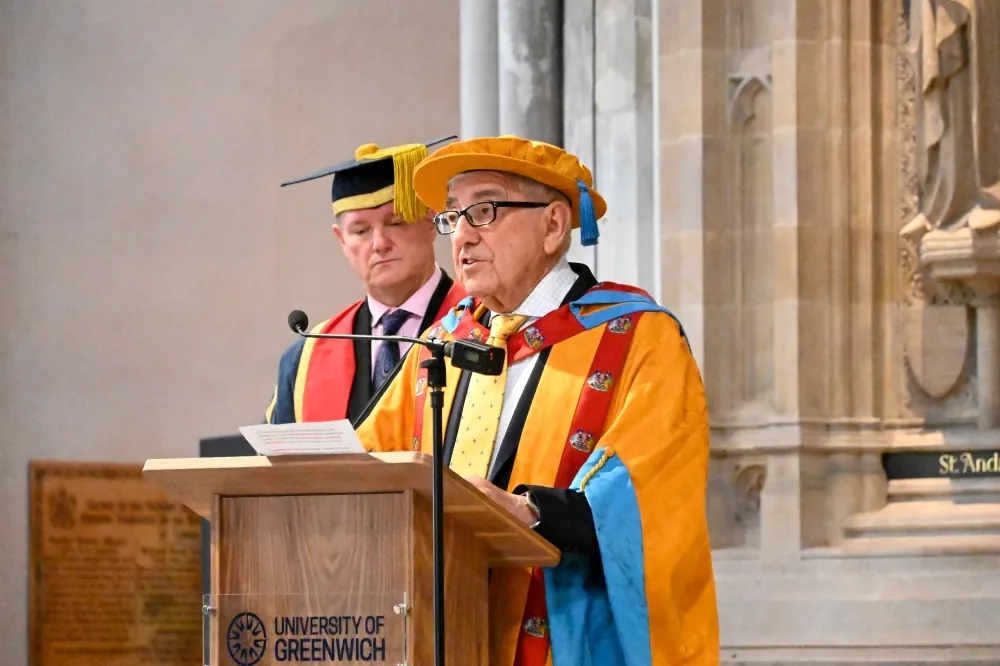
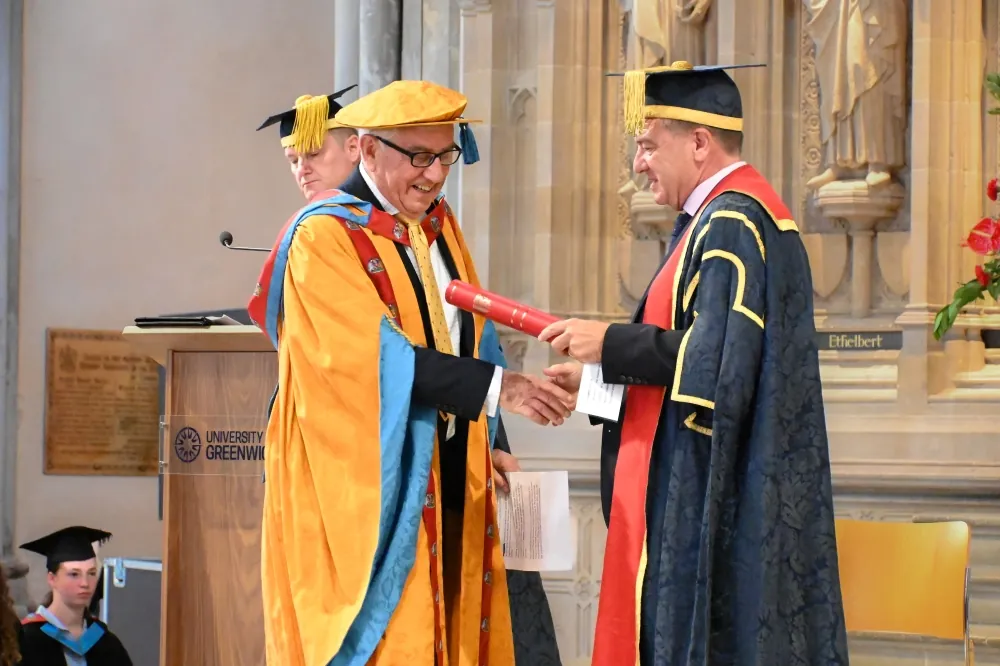
Bob Taylor, the driving force behind England’s largest regional network of farmers’ markets, has been awarded an Honorary Doctor of Science by the University of Greenwich.
Over the past two decades, Bob has become one of Kent's most influential local food champions, helping transform farmers' markets into thriving community spaces that support producers, strengthen local economies and improve access to fresh, seasonal food.
His honorary degree recognises his outstanding service to Kent's farming community and the lasting partnerships he has built with organisations, including NRI, to strengthen local food systems through innovation, research and community action.
Bob said: ‘It was a great surprise and I felt very honoured to be awarded the Honorary Doctor of Science. But most of all I am really pleased to see that the University has recognised the importance of local food and the hundreds of local food producers who prepare and travel in all weathers to sell their wares.’
Building stronger local food systems
Unlike many working in agriculture, Bob did not begin his career in food. After studying commerce at the University of Manchester, he spent many years designing and coordinating major IT and telecommunications systems for the petroleum industry across Europe and the United States before later establishing a successful business where he developed electric fencing kits for the domestic market.
Retirement, however, marked the beginning of an entirely new chapter.
As volunteer manager of the weekly Shipbourne Farmers' Market, Bob quickly demonstrated the creativity and determination that would define his contribution to Kent's local food landscape. Long before cashless payments became mainstream, he introduced the "Shipbourne Pound" to make buying produce easier for customers. Launched to address the lack of cash machines at the farmers’ market, the ‘currency’ could be purchased at the local pub and used to buy produce from the market.
During the COVID-19 pandemic, he developed an ‘online/drive through’ farmers’ market that enabled residents to continue buying fresh local produce while restrictions were in place.
Under his guidance, Shipbourne Farmers' Market was named Kent's Best Farmers' Market seven times in ten years. Bob was awarded the British Empire Medal in 2024 in recognition of his service to the community.
A lasting legacy across Kent
Bob's impact extends well beyond a single village. In 2008, when many farmers' markets were struggling, he helped establish the Kent Farmers' Market Association (KFMA), bringing together markets that had previously operated independently.
As Vice Chair and later Chair from 2017, Bob helped grow KFMA into the largest regional network of farmers' markets in England. Today, the network supports 40 markets operating over 750 market days each year while creating new opportunities through an expanding wholesale service linking local producers with food outlets.
His work has helped strengthen shorter food supply chains, giving small-scale producers greater visibility while making locally produced food more accessible to communities across Kent.
Working with NRI
Bob's commitment to strengthening local food systems has also created valuable opportunities for collaboration with NRI.
Through the Growing Kent & Medway programme, KFMA has worked closely with NRI's food safety specialists to support food businesses in meeting regulatory requirements. Other NRI experts have helped early-stage food entrepreneurs test and trial new food products in real-world market settings.
The partnership has also supported teaching and research. Bob has facilitated NRI MSc students researching topics including consumer behaviour and market profitability, helping connect academic research with the realities faced by producers and local businesses.
These collaborations reflect NRI's wider mission to translate research into practical solutions that benefit communities, businesses and sustainable food systems.
Bob said: ‘Working with NRI has given us an insight as to how we could both benefit from basic research methods and linking to new technology.’