

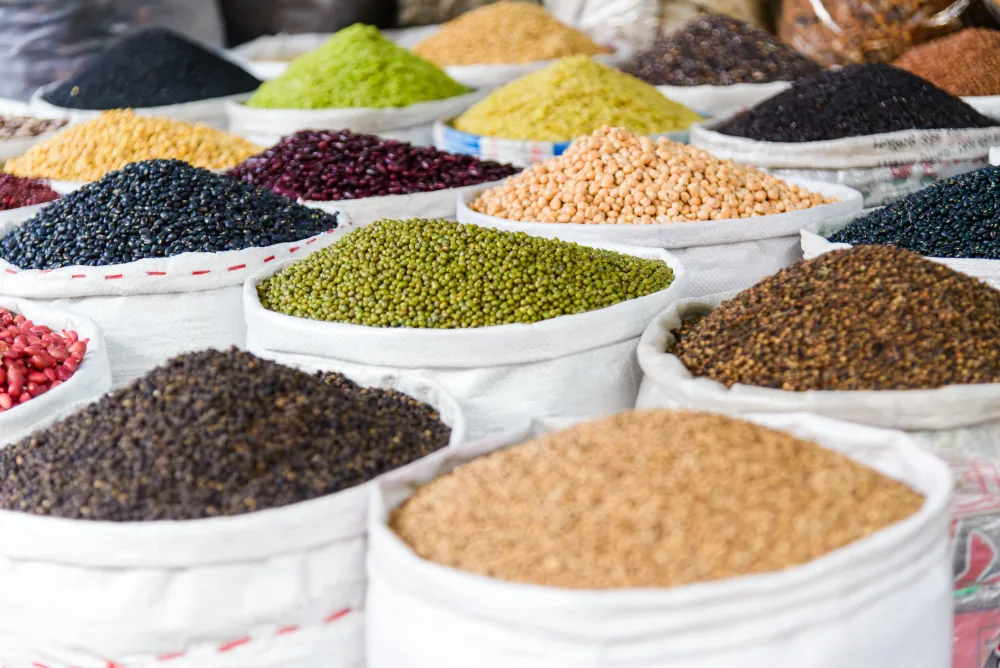
For such unassuming crops, pulses – beans, chickpeas, lentils and peas – are quietly reshaping how we think about food, nutrition and sustainability. Rich in protein and micronutrients, capable of fixing nitrogen in soils, and resilient to climate stress, they link nutrition, environmental sustainability and livelihoods. Across continents and disciplines, NRI researchers are working and collaborating to unlock their full potential, not only in how they are grown, but also how they are processed, protected and consumed.
Rethinking protein through climate-smart crops
At the Medway Food Innovation Centre, NRI researchers are advancing new ways to use pulses such as faba bean (broad beans), chickpea, lentils, lupin and peas as sustainable protein sources for emerging food systems. This work responds to growing global demand for alternatives to meat and dairy, driven by climate, health and resource pressures.
A key focus of this work is the development of low-impact processing methods, such as dry fractionation, which concentrates plant proteins without the use of water or harsh chemicals. These techniques reduce environmental footprints while delivering high-quality, functional proteins suitable for local manufacturing. Using these proteins, NRI researchers are developing improved plant-based meat alternatives with better texture, nutritional qualities, taste and flavour.
Another strand of research is shining a light on underutilised pulses such as Bambara groundnut and lupin, revealing their remarkable nutritional and functional potential. NRI scientists and their collaborators have shown that these crops offer strong amino acid profiles, valuable bioactive compounds and antioxidant properties, making them well-suited to gluten-free and plant-based foods.
All this work is illuminating new market opportunities for farmers and processors alike.
Pulses, nutrition and child health
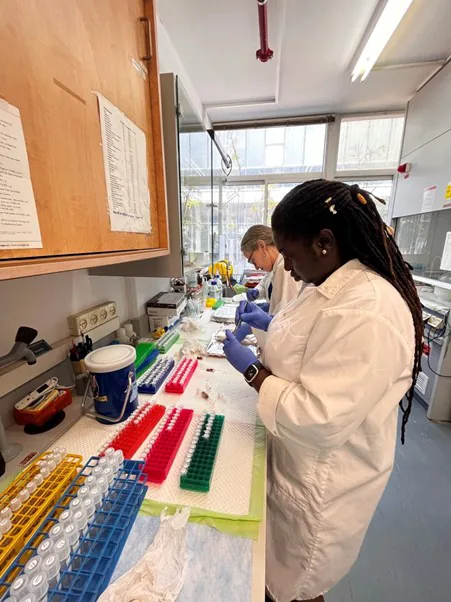
Pulses provide a unique combination of high-quality protein, fermentable fibre and essential micronutrients, making them a ‘superfood’ for gut health. NRI is also developing a plant-based ready-to-use therapeutic food (RUTF) from chickpea and soya bean to support holistic recovery from malnutrition. NRI in collaboration with several UK and international partners[1] has been focusing on using chickpea and soya bean to develop a plant-based ready-to-use therapeutic food (RUTF) to support holistic recovery from malnutrition.
This work is exploring how pulse-based formulations can support gut healing, a crucial barrier to effective malnutrition recovery, where inflammation and gut dysfunction impair nutrient absorption. Importantly, it highlights how pulses can support both child health and sustainable food systems, especially in low-resource settings.
Protecting value beyond the harvest
Yet, growing and processing pulses is only part of the story. A significant proportion of the food and nutrition pulses provide is lost after harvest, particularly in low- and middle-income countries. NRI research into postharvest losses reveals how critical this often-ignored stage is for sustainable food systems.
In Benin, for example, studies of cowpea and groundnut systems found that farming households lose around 19–22% of cowpea harvests between harvest and the end of their six months of storage. Losses occur during harvesting, drying, threshing and storage, driven by rainfall, labour shortages, pest damage and inadequate storage methods. These losses directly undermine household incomes and dietary protein availability.
NRI researchers, working with collaborators, are combining measured loss assessments with laboratory studies and systematic reviews across Africa and South Asia to build a stronger evidence base to guide targeted, participatory interventions. Crucially, this work emphasises collaboration with farmers and value-chain actors, ensuring that solutions are practical, locally appropriate and socially inclusive.
As global interest in protein diversification grows, protecting pulses from postharvest loss is essential to ensuring that increased production translates into real nutritional and economic gains.
Linking science to systems change
Across these diverse research areas, a common thread emerges. Pulses are not just crops, but connectors, linking soil health to climate resilience, farming systems to food innovation, and nutrition outcomes to livelihoods. NRI’s work integrates laboratory science, field research and systems thinking, connecting advances in protein processing and food technology with on-the-ground realities of farming, storage and consumption.
This holistic approach positions pulses as central to national and global priorities, including food security, climate adaptation, sustainable diets and inclusive economic development. NRI research demonstrates that pulses are a vital catalyst for efficient, resilient, and equitable food systems, underpinning innovation in plant-based foods, safeguarding child health, and reducing losses along value chains.
As pressures on global food systems intensify, pulses are a stark reminder that solutions do not always lie in entirely new technologies. Sometimes they lie in re-imagining the value of crops that have sustained communities for generations. Through its work on pulses, NRI is helping ensure that this value is fully realised, across scales and geographies.
About this article
This article brings together insights from NRI researchers working on pulses across food innovation, nutrition and postharvest systems. Contributions were provided by Dr Tanya Stathers (postharvest loss and value chains), Dr Parag Acharya (alternative proteins and food systems innovation), Dr Vahid Baeghbali and Dr Tonna Anyasi (pulse functionality and food applications), and Laura Utume (nutrition and child health).
Footnotes
[1]The Hebrew University of Jerusalem, the University of Kent, the University of Nottingham, food-tech start-up ChickP, and Peter Akomo, an international consultant and food technologist affiliated with the Irish NGO, Valid Nutrition.