

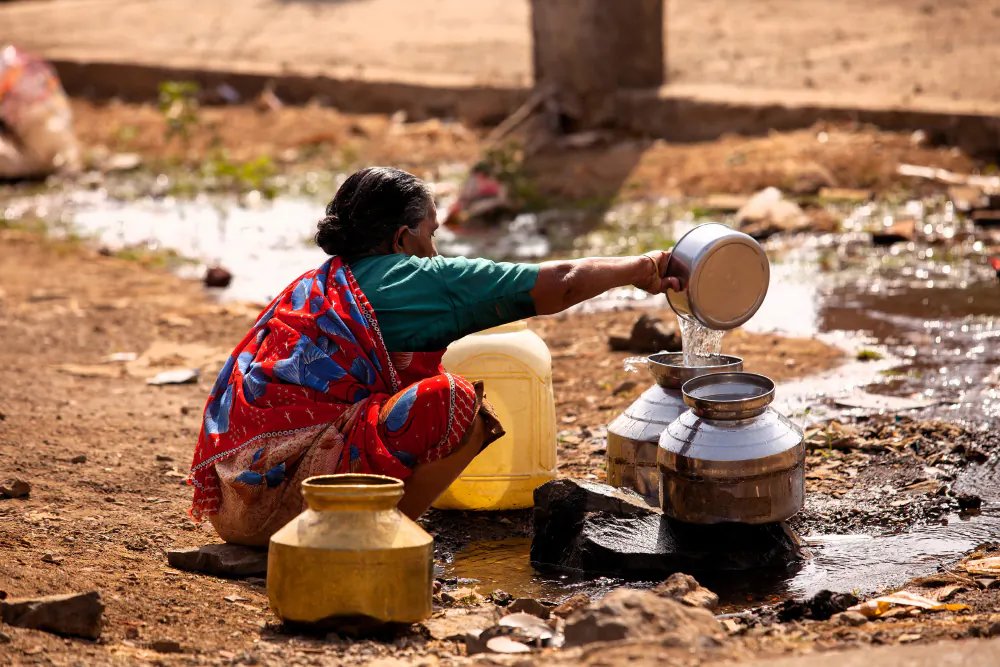
Water is fundamental to life, health, and livelihoods. However, for millions of people around the world, access to safe and reliable water remains uncertain. This precarious reality is shaped not only by environmental change but by deep-rooted inequalities in power, governance, opportunity and gender.
NRI research spearheaded by Dr Pamela Katic highlights the need to rethink how we understand and respond to water challenges. Across diverse contexts – from the Peruvian Amazon to irrigation systems in Ghana, and from global policy debates to Indigenous knowledge systems – this work shows that water issues are not just technical challenges. They are questions of justice, equity, and value, with gender playing a key role in how they are experienced.
Water, inequality and lived experience
At the household level, how water insecurity is experienced is closely tied to health and wellbeing. Research with Awajún Indigenous women in the Peruvian Amazon shows how household’s water insecurity experiences affect maternal and child health outcomes, including stunting.
Crucially, this work demonstrates that how we measure water security matters. Standard metrics often fail to capture the lived experiences of women, who are typically responsible for water collection and household management. Centring experiential and culturally grounded measures is essential to better understanding how water insecurity relates to food security, health and wellbeing.
Irrigation, livelihoods and unequal benefits
Water is also central to economic opportunity, particularly in agriculture. However, a study by Dr Katic in Ghana shows that irrigation initiatives do not benefit everyone equally.
While irrigation can improve productivity and incomes, women and young people often face barriers to accessing land, water, and finance. As a result, they are less able to benefit from these irrigation developments, potentially widening inequality. The findings highlight that beyond focusing on poverty reduction and productivity gains, irrigation programmes need to embed health and the needs of women and youth to ensure more inclusive outcomes.
Dr Katic said: “We need much deeper and nuanced insights on the effects of irrigation and other agricultural water management systems on the multiple livelihood dimensions of various types of actors, in particular women and youth”
Rethinking water governance
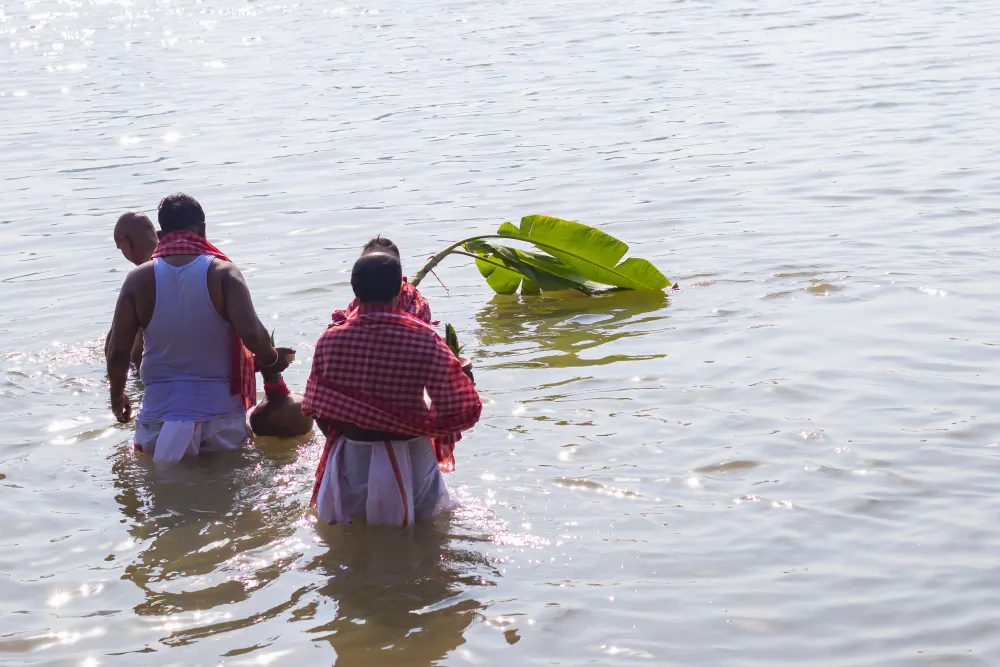
At a broader level, work involving NRI researchers challenges dominant approaches to water management that focus primarily on technical fixes or economic growth. The researchers call for a rethinking of responses to water crises through a ‘beyond growth’ lens that prioritises human and planetary wellbeing over economic growth as an end in itself. Beyond growth approaches complement current effective responses to deliver a sustainable water future.
A related strand of research highlights the need to rethink how water is valued, arguing that Water is not simply an economic resource; it holds cultural, social, and ecological significance. Recognising these multiple values is essential for more just and sustainable governance.
Bridging knowledge systems for more just water futures
A key theme across this body of work is the importance of weaving different ways of knowing and relating to water.
NRI-led research on water justice shows how creative collaborations across knowledge systems can reveal dimensions of water often overlooked in conventional models of water governance. These approaches help emphasise the cultural and relational meanings of water, as well as the injustices faced by marginalised communities.
By bringing together scientific, local, and Indigenous Peoples’ knowledge systems, researchers and practitioners can develop more inclusive and context-sensitive solutions – particularly in complex, transboundary water systems.
Connecting water, health and climate
Water challenges do not exist in isolation. They are deeply intertwined with climate change and public health.
Recent work highlights the urgent need to break down silos between these sectors. Climate change is intensifying water scarcity and variability, which in turn affects health outcomes and exacerbates inequalities. Addressing these interconnected challenges requires coordinated, cross-sectoral approaches that place vulnerable populations at the centre.
Towards more equitable water futures
Taken together, this research delivers a clear message: solving water challenges requires more than infrastructure or technical expertise. It demands a fundamental shift in how we think about water from a narrow focus on supply and efficiency to a broader understanding of justice, equity and sustainability.
This includes recognising the central role of women and marginalised groups in water governance, addressing structural inequalities, and ensuring that diverse voices are included in decision-making processes.
A more inclusive path forward
NRI’s work is helping to shape more effective responses to global water challenges by advancing interdisciplinary, intercultural, justice-focused, and inclusive approaches. Ultimately, ensuring sustainable water futures requires more than managing a resource; it is about creating systems that support health, livelihoods, and dignity for all.