

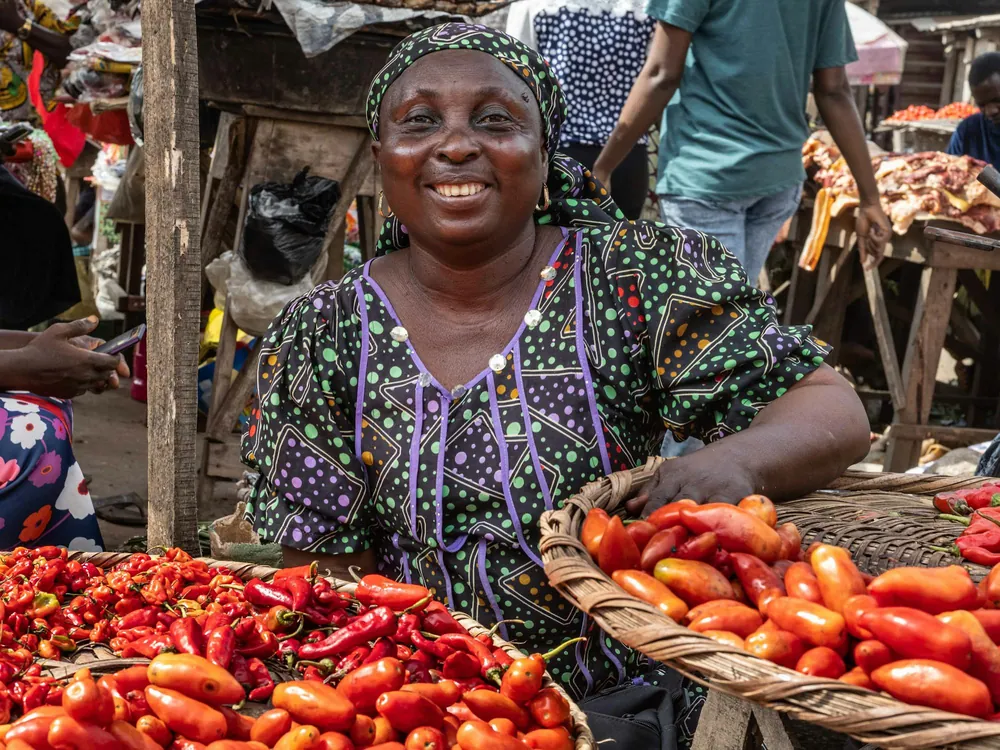
The recent report by FAO, NRI and AWARD on the status of women in agrifood systems in sub-Saharan Africa underlines a ‘moral imperative’ as the basis for greater gender equality and empowerment of women in agrifood systems and rightly links gender equity to more effective policy.[1] The study shows what all good feminist analysis ought to – how a focus on working women can illuminate the social dimensions of systems and processes of food production and its related agroecological dimensions. It directs our attention to the inequalities prevalent within the social, cultural and economic structures which women have to negotiate to produce both food and more equitable agrifood systems. By focusing on women, agrifood systems can privilege the social reproductive question which even good policy so often skims over. Good policy, after all, ought to be built around people.
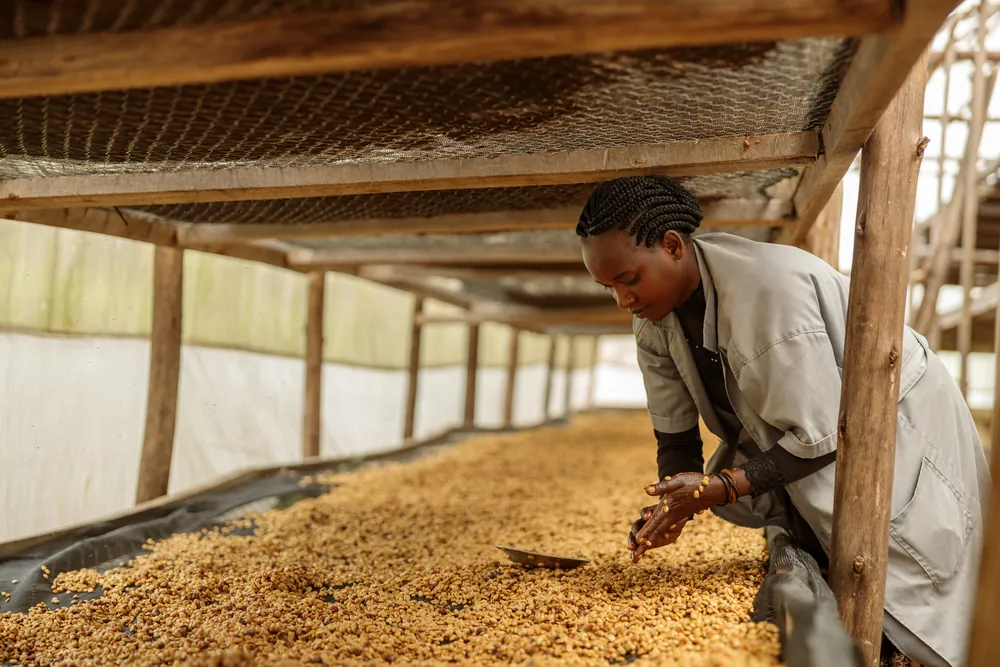
In this regard, one significant contribution of the report is to concretely link the question of land, food and nature to gender equity through a structural approach that takes seriously the ways in which gendered labour both produces and reproduces land and landed resources. It highlights notions of ‘rights’ that are so often abstracted from the social contexts within which they are demanded, and connects the demand for rights to the social, cultural and economic activities of working women, in this way returning significant agency (and history) to women as major actors in Africa’s agrifood systems.
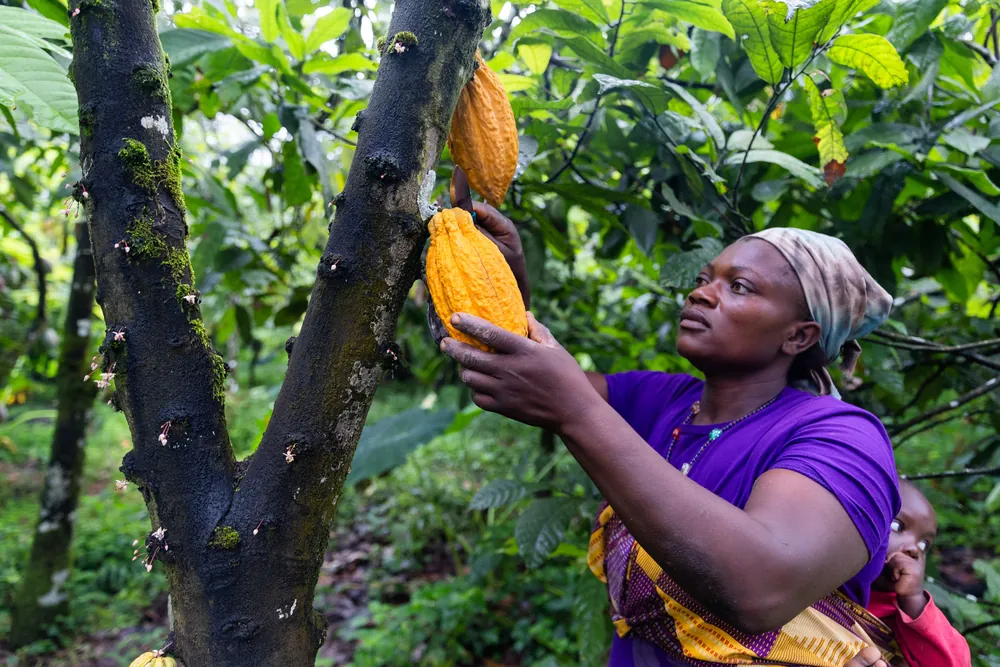
The report’s methodological approach is particularly illuminating in the ways in which it draws on context-specific data and research, linking structural inequalities in various thematic fields[2] to gender inequalities and even gender-based violence. In other words, in drawing a link between labour, resources, and harm, thus rendering women visible not only as labouring subjects, but also as reproductive subjects who often have to negotiate unsafe working conditions. The study succeeds in systemically linking the moral imperative for gender equality to the economic imperative as well as the political ecosystem – as such demanding action in all three realms. It makes clear that it is impossible to make sense of the primacy of women’s work in agricultural food production without a clear understanding of their reproductive work, and without also seeing the coercive and patriarchal structures that organise both productive and reproductive work in those domains.
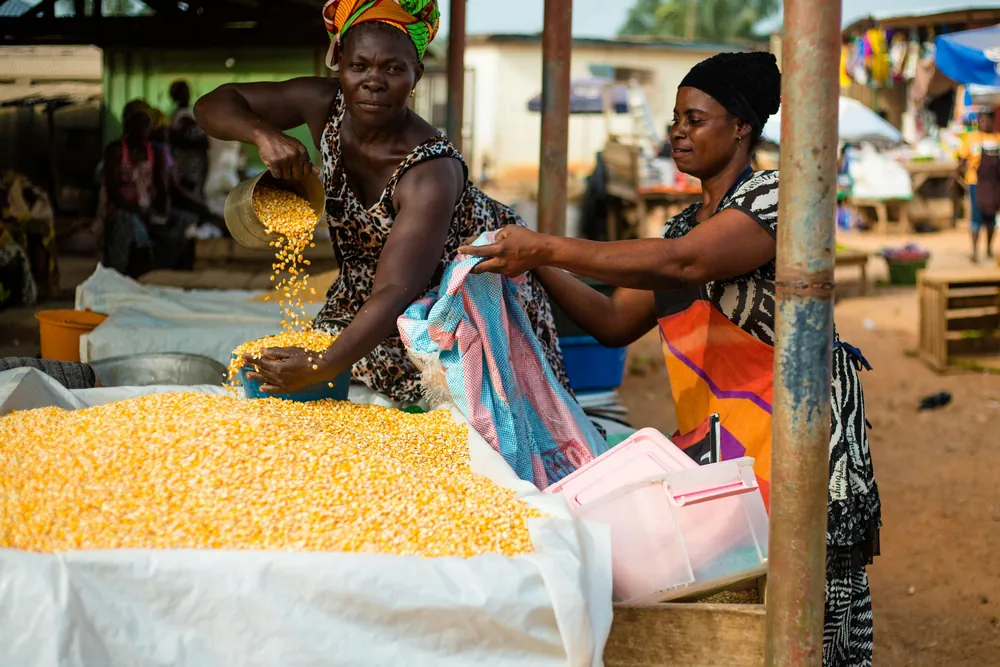
The methodological argument that flows from the above thus also makes the case for modification in how we think about social reproduction: that is, for the need to place the possibility of care in its specific or material context. This is a significant point which the study makes. More recently, studies about the global south have begun to place emphasis on the material resources which shape how people respond to the care and reproductive needs through approaches that illuminate the structures, conditions and institutions that support the daily and generational reproduction of working people.[3] A conceptual turn to ‘economies of care’ makes room for greater articulation between women’s work and the varied social, cultural, and political resources that in reality support social reproduction in the absence of adequate state support. Such a conceptual shift also allows for more historically-nuanced representations of social reproduction in the global south context, where state support is limited, and where instead, non-traditional family forms, kinship structures, and other forms of communal organizing and resources play a much more significant role in meeting household food and energy requirements. The question that emerges here is how to account for these non-capitalist realms in policymaking.
The study’s examination of the ways in which gender inequalities shape the legislative and policy fields that determine how women experience and survive the pressures of food production is also significant. These inequalities, as it shows, are in part a legacy of colonial capitalist accumulation, wherein women’s work was redirected towards the social and economic function of reproducing labour power and enabling extraction of surplus value. The colonial demand for African labour did shift women’s roles from production of food to reproduction of labour. The resolution of this labour question required significant intervention into the reproductive domain and required the regulation of women’s bodies and work. This logic of incorporation of gendered labour to subsidise wage labour persists in the postcolonial capitalist state/economy, suggesting that the economic structure of gender inequality ought to constitute an important basis for understanding contemporary processes of social reproduction. These historically gendered patterns of accumulation (and agrarian dispossession), as the report highlights, remain visible in Africa’s contemporary agrifood systems. The call here is for policy to take a more structural approach in addressing gender inequality.
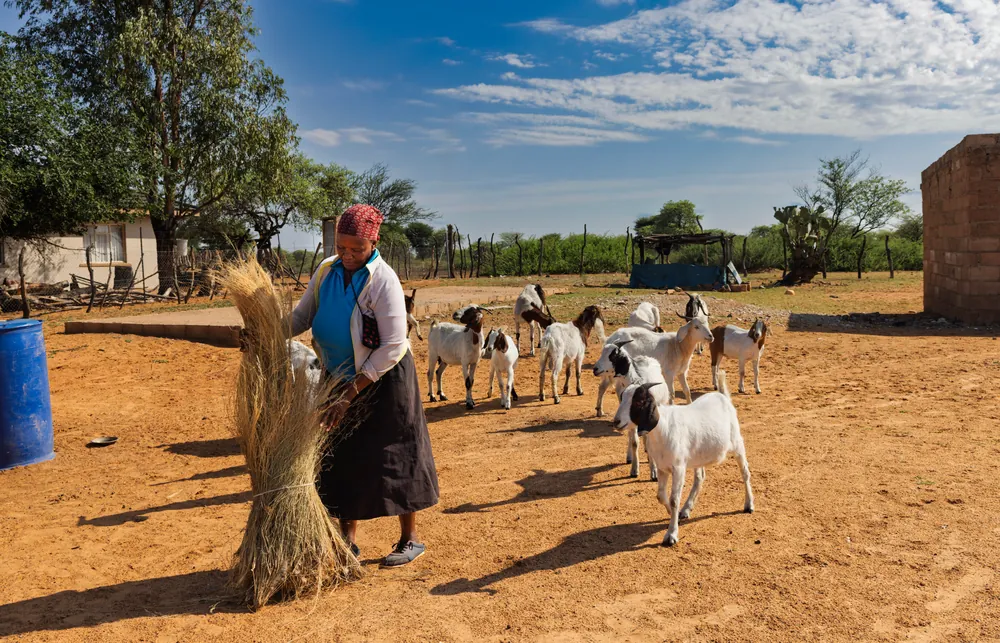
The study also points us towards the region’s young and growing population, and makes an interesting link between this trend and the unfolding climate and environmental crisis. The youth bulge is particularly worrying since, increasingly, the data links it to unemployment and the pressure that this adds to women’s labour and time because households have to bear the burden of social reproduction in the absence of wages, state support, or income from petty trade. It is not an exaggeration to state that Africa’s youthful population is no longer distinguishable from its surplus population.
The significance of this link is the crisis of social reproduction that it portends, since reproduction has to take place whether or not people are employed. Today in the context of massive unemployment and wholesale abandonment by the neoliberal state, social reproduction is more articulated to the needs of survival of immiserated families/households. For the survival of this surplus population, land, nature, and the commons that support peasant subsistence assume a different significance, not just in a productivist sense but fundamentally also now as the basis of social reproduction and the very possibility of survival for millions of people. Agrifood policies, therefore, must pay attention to the changing demands on land as well as the tension between its productive and reproductive aspects, since a greater demand on women’s reproductive labour on land is likely to foment new inequalities if not linked to women’s direct needs.
On the bright side, the significant growth in women’s cooperatives, credit and savings groups, and producer-to-marketing associations reported is worth noting. These should be read in part as a social response to the economic marginalisation that women encounter in the formal financial system. These monetary decisions, in fact, ought to be understood as constituting women’s social movements which, in addition to women’s historical participation in environmental and agrarian movements, hold real possibilities for advancing women’s agency as well as improving their bargaining capacity for ‘right-based’ claims making.
Such monetary strategies can also concretely be linked with economic responses to the social issues such as gendered violence, which is an extremely important aspect that the report explicitly addresses in relation to agrifood systems. Feminist economics is increasingly showing that the prevalence of GBV cannot be understood separately from women’s social and economic struggles for survival. Relatedly, the report gives due attention to the internal contradictions and possibilities of violence (GBV and other forms of structural exclusion) that arise when policy does not pay adequate attention to social difference. Difference (including race, caste, class, gender, ethnicity, sexuality) was, as we know, the basis of social and political control in the colonial period and remains so in the postcolonial state. The question we should be asking is why democracy has not been able to minimise violence, and whether the problem is the disconnect between the social/economic and political lives of women.
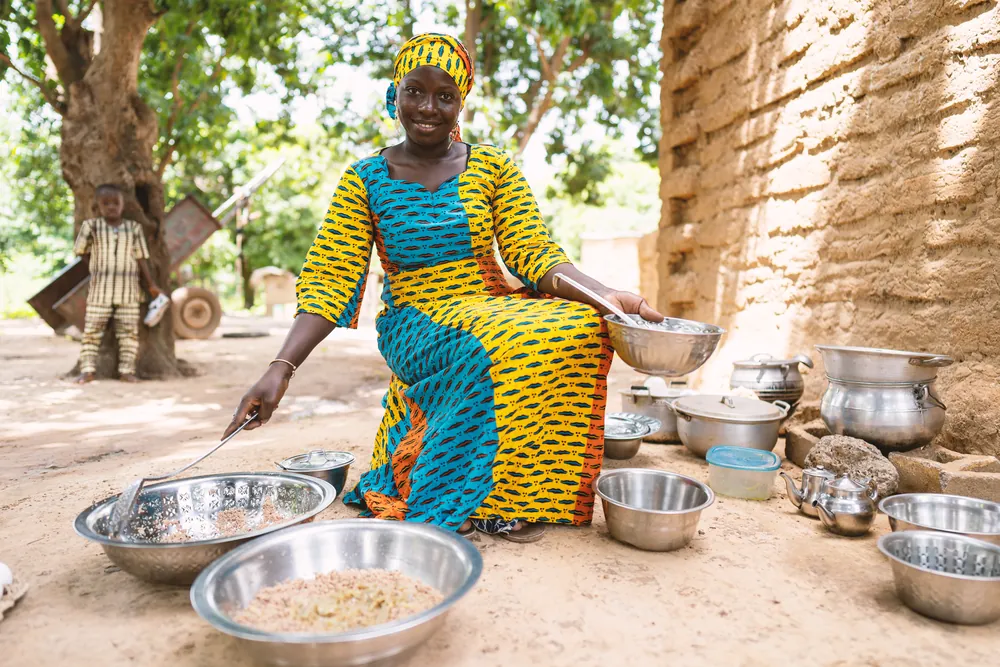
The historical relationship between violence and the colonial state is reconstituted in the postcolonial period through a structural relationship between working people and the neoliberal capitalist state that retains force and violence as a mode of extraction. In the contemporary period across the Global South, we are witness to the violence which accompanies social reproduction and women’s work in general, evidenced by statistics that suggest a link between poverty and gendered violence,[4] and in the conditions of neoliberal workhouses that are Export Processing Zones (EPZs) – which draw a straight line between the gendered dispossession in the agrarian sector with gendered exploitation in agro-processing industries. Studies that demonstrate these links such as this one does are therefore extremely necessary.
Ultimately, the study directs our attention to the fact that rights to land, water, nature, and forests are vital for women’s productive, care and reproductive work and shows us the complex ways in which agrifood systems are implicated in this mix. This is a domain of feminist struggle in which a full gauging of the nature and extent of gender inequalities requires a constant and commensurate accounting for the reproductive burden which is borne mainly by women. This is possible only when people, rather than systems, constitute the starting point of our analysis. Studies committed to gender equity must strive to properly place women in all of the social and material contexts within which they produce food and reproduce society, as the current study so clearly does, and it is from here that policy must take its lead.
Professor Ossome is Director of the Makerere Institute of Social Research (MISR) at Makerere University, Uganda
[1] FAO, NRI, AWARD (2025), The status of women in agrifood systems in sub-Saharan Africa. Rome. https://doi.org/10.4060/cd6631en
[2] A number of key themes are explored in the report from a critical feminist perspective: ‘women’s work in agrifood systems, food security and nutrition, relationships to nature and natural resource rights, climate impacts, innovation, and women’s agency and collective action’ (ibid, 5).
[3] See, for instance, IDRC publication titled “Localizing the Care Economy,” available online at:https://issuu.com/idrc_crdi/docs/localizing_the_care_economy_en
[4] WHO (2013, cited in Tithi Bhattacharya (2021), “Explaining gender violence in the neoliberal era,” International Socialist Review, Issue #1: https://isreview.org/issue/91/explaining-gender-violence-neoliberal-era/index.html. The data shows that 35.6 percent [of women] will experience physical or sexual violence in their lifetime, usually from a male partner. The highest levels of violence against women are in Africa, where nearly half of all women, 45.6 percent, will suffer physical or sexual violence. In low- and middle-income Europe, the proportion is 27.2 percent; and one-third of women in high-income countries, 32.7 percent, will experience violence at some stage in their life.