

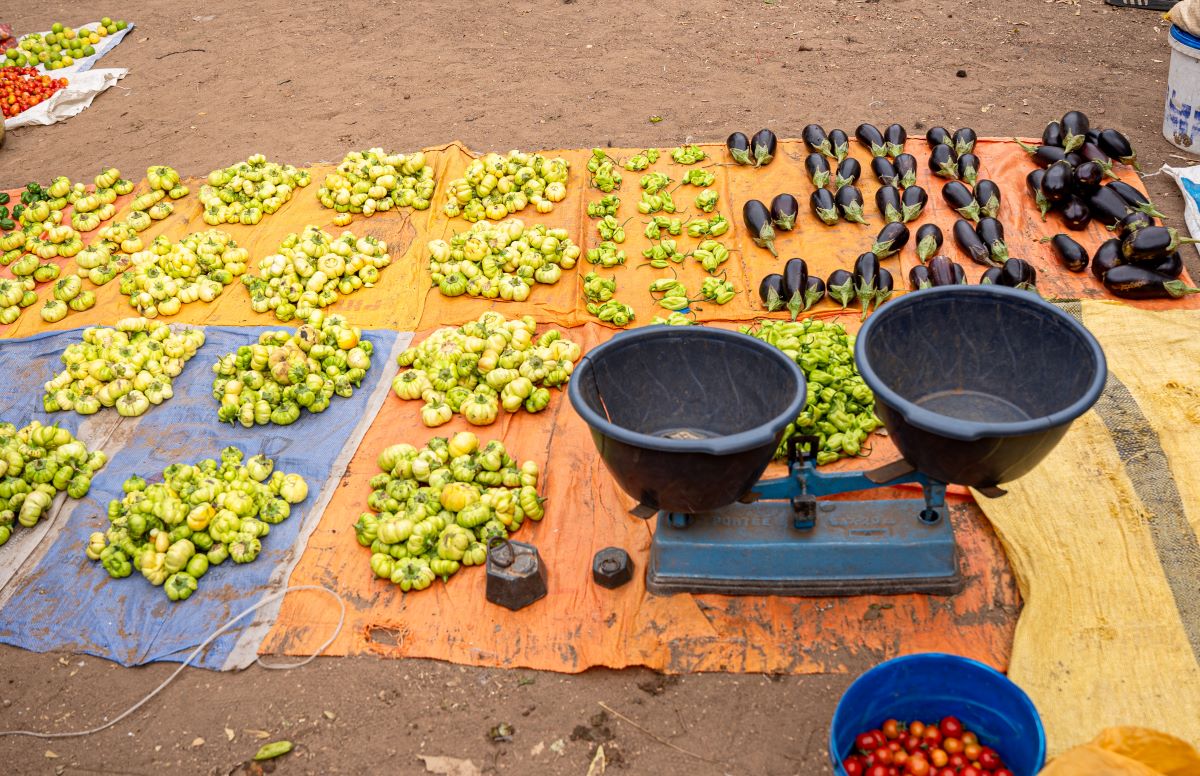
In the bustling markets of Ziguinchor, Senegal, daily life unfolds in colour and complexity. Crowded alleyways, vibrant produce stands and the constant rhythm of commerce set the scene. Yet beneath the bustling energy lies a deeper challenge: how do vulnerable urban consumers navigate their food environment to acquire and consume nutritious, healthy diets in the face of climate-related pressures?
To better understand these challenges, the SAFOODS project invited residents of low-income neighbourhoods in Ziguinchor to participate in a study to investigate their lived experiences of fruit and vegetable acquisition practices in the urban food environment. Using a combination of focus group discussions, participatory mapping and photography methods, residents shared their fruit and vegetable acquisition and consumption practices and conveyed how these fitted into their daily lives and activities. Fieldwork was coordinated by Dr Chris Turner, Senior Lecturer in Food Systems and Public Health Nutrition at NRI, along with Dr Ninon Sirdey from CIRAD (France), and colleagues from ISRA-BAME (Senegal).
Data analysis was undertaken by Julia Ligori from the Institute of Research for Development (France), supported by Dr Turner. Findings highlighted the factors that either facilitate or hinder the consumption of fruits and vegetables in disadvantaged neighbourhoods, drawing on testimonies and images from the daily lives of these communities. The analysis revealed four key themes related to the food environment of vulnerable urban populations: limited basic services, such as water and streetlighting; the central role of women in food provision; market access and mobility challenges; and the effect of high and volatile prices.
Dr Turner said: ‘The findings from this project highlight the diverse drivers of food acquisition and consumption practices in urban settings. One of the most interesting and novel findings from this study was importance that participants placed on urban infrastructure and service challenges, particularly in relation to mobility challenges, which were exacerbated during the rainy season. These findings reinforce the reality that food environments are an integral part of the wider built environment, and that improving access to fruits and vegetables in urban settings such as Ziguinchor requires holistic multi-sectoral systems-orientated governance and interventions at the city level, beyond what might typically be considered within the realm of public health nutrition.’
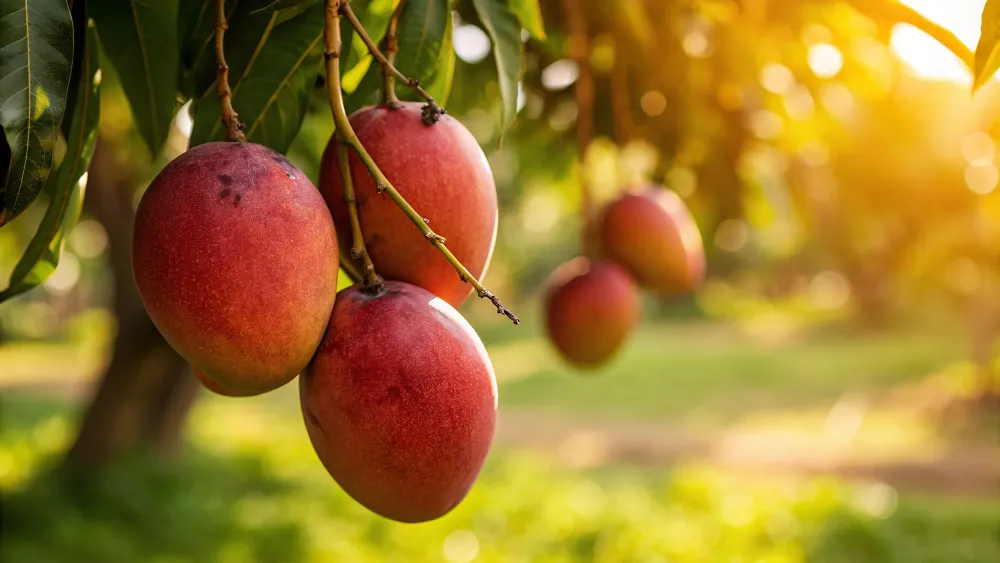
Meanwhile, in Korhogo, Côte d’Ivoire, another part of the SAFOODS story was taking shape, this time with mangoes, a popular seasonal fruit rich in essential micronutrients, widely produced in the north of the country (Korhogo area). However, nutritional flows across value chains and their resulting nutritional impact are poorly understood. During her time at NRI, researcher Dr Aurélie Bechoff applied the NUTRI-P-LOSS methodology to assess nutritional flows in the mango value chain. NUTRI-P-LOSS is an innovative approach co-developed by Dr Bechoff, that predicts nutritional postharvest losses across crop value chains.
Her findings showed that the domestic nutritional contribution of mango is likely to increase in future, helping to address vitamin A and C deficiencies and anaemia-related issues. These issues remain prevalent, particularly among vulnerable groups such as children under five and women of reproductive age. Dr Bechoff noted, ‘Our work led to the development of a user-friendly tool based on past and present data to predict the future nutritional impact of crop production, using mango in Côte d’Ivoire as an example.’
Strengthening African FOOD Systems in the face of climate change and food insecurity (SAFOODS) is a multi-country project that aims to tackle the dual challenges of food and nutrition security and climate change adaptation in West Africa. It focuses on fruit and vegetable food systems of tomatoes, mangoes, green beans and spinach, which are crucial for nutrition in several cities across Senegal and Côte d'Ivoire but vulnerable to the impacts of climate change. The project aims to enhance the resilience of these food systems by developing effective adaptation strategies. SAFOODS is coordinated by CIRAD (France) and co-implemented with ISRA-BAME (Senegal), Université Nangui Abrogoua (Côte d'Ivoire), and NRI.