

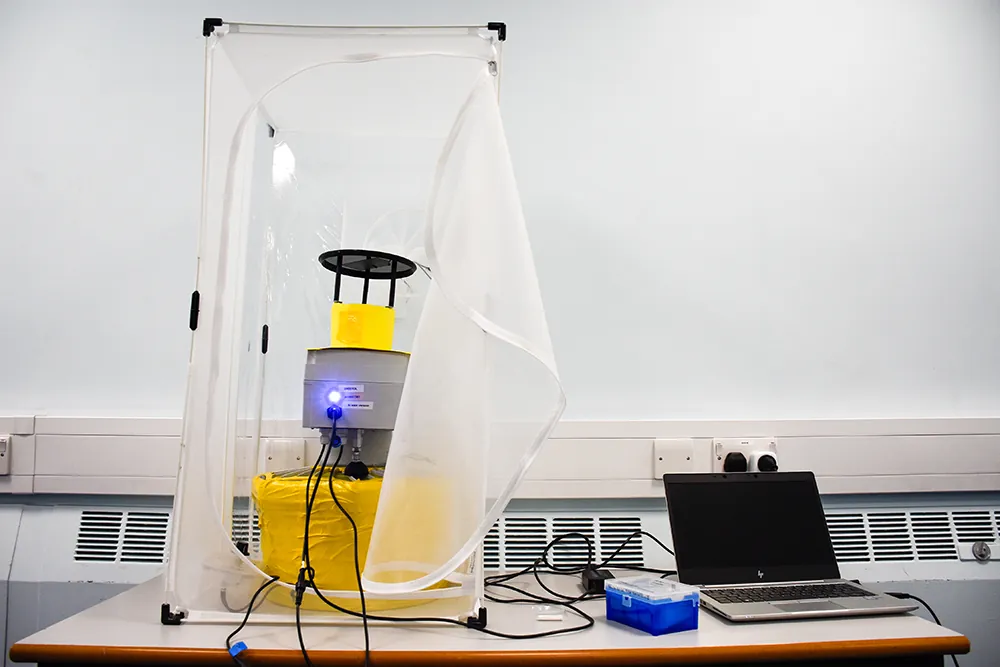
Scientists at NRI, in collaboration with the University of Bristol and Spanish technology company IRIDEON S.L., have developed an innovative smart trap to tackle one of the UK's most economically significant pests, the whitefly (Bemisia tabaci). This regulated quarantine pest is frequently found on imported ornamental plants such as poinsettias and poses a serious risk to the wider horticultural sector due to its ability to transmit over 300 plant viruses, affecting high-value crops such as tomatoes and cucumbers.
Currently, plant health inspections rely heavily on visual checks and in-field yellow sticky traps. These methods often require laboratory confirmation to distinguish B. tabaci from morphologically similar, non-quarantine species such as the common glasshouse whitefly (Trialeurodes vaporariorum). This process is time-consuming, costly, and prone to delays, limiting the ability of inspectors to respond quickly to potential outbreaks.
The smart trap, on the other hand, enables passive, automated and real-time detection and identification of B. tabaci, offering a transformative alternative to traditional surveillance methods. Developed under the ‘Smart traps for improved surveillance and early detection of plant pests’ project, the smart trap combines a suction trap with an optical sensor powered by machine learning.
NRI coordinated the project, bringing together a multidisciplinary team of entomologists, plant virologists, engineers, and data scientists. It also led the biological testing and stakeholder engagement, while the University of Bristol developed the machine learning algorithms. IRIDEON contributed its optoelectronic sensor expertise, previously applied in mosquito surveillance.
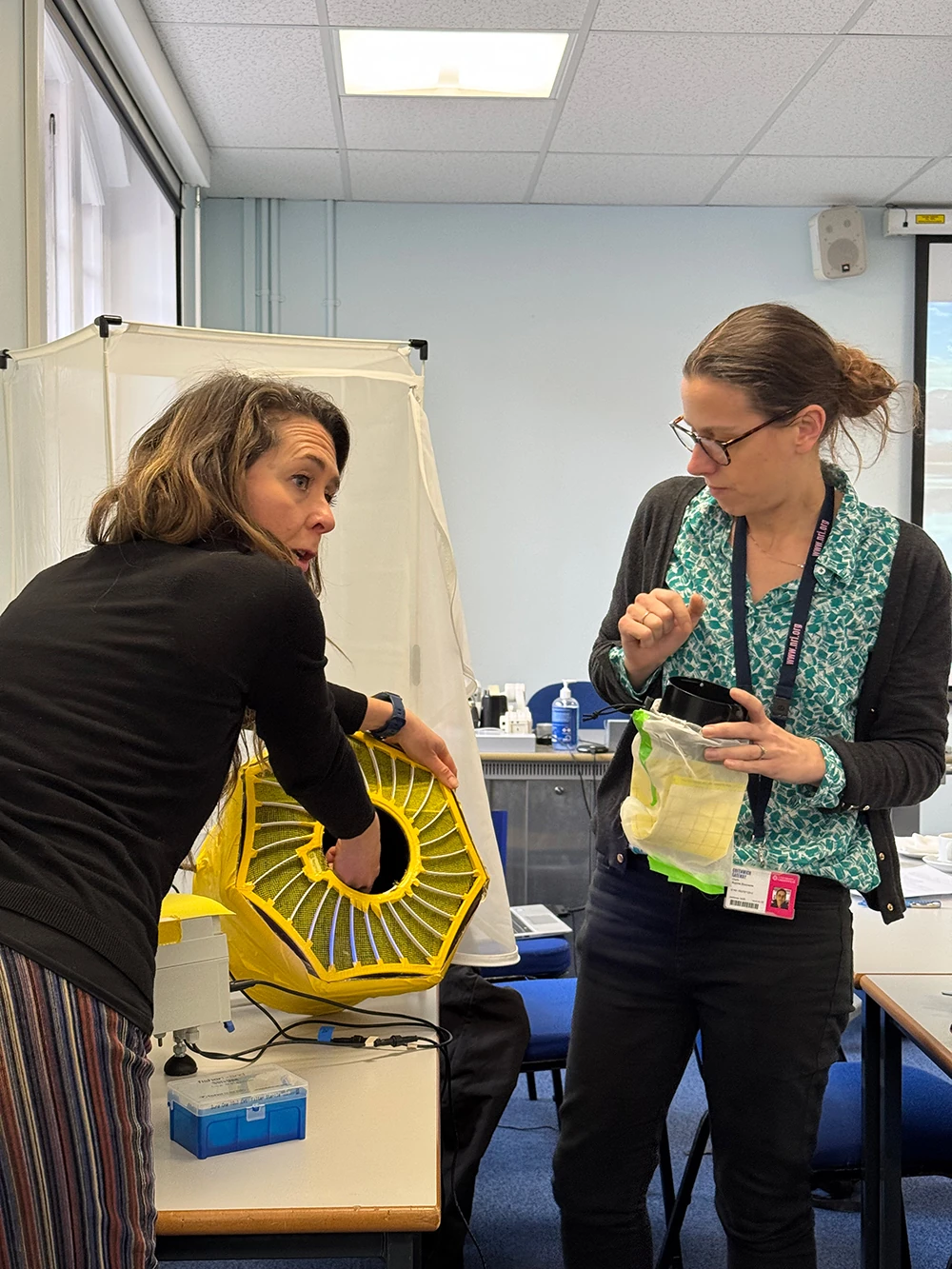
The development process involved optimising the trap design to trap whiteflies, integrating the sensor hardware, and training the machine learning model using flight pattern data from B. tabaci, and other insects. The resulting system achieved over 99% accuracy in distinguishing the target pest under controlled conditions. A stakeholder workshop held at NRI in early 2025 brought together representatives from Defra, the Animal and Plant Health Agency (APHA), and the British Ornamental Association, who provided valuable feedback on the trap’s usability and deployment potential.
Dr Gonçalo Silva, who led the project, said: ‘The benefits of the smart trap are its real-time and passive surveillance capabilities. Our initial results showed great promise that the technology can be used to enhance the efficiency of inspections and help maintain pest numbers and the scale of outbreaks at low levels.’
The next phase of the project will focus on scaling up the technology for commercial production, including field validation in commercial nurseries and integration with digital platforms for remote monitoring. The team is also exploring opportunities to adapt the system for other regulated pests, expanding its utility across the plant health sector.
The project’s outcomes align closely with the UK’s Plant Biosecurity Strategy (2023–2028), which emphasises the need for innovative technologies to enhance early warning systems and reduce reliance on chemical controls. By automating pest detection and enabling rapid response, smart traps offer a sustainable, scalable solution to one of the most pressing challenges in plant health.