

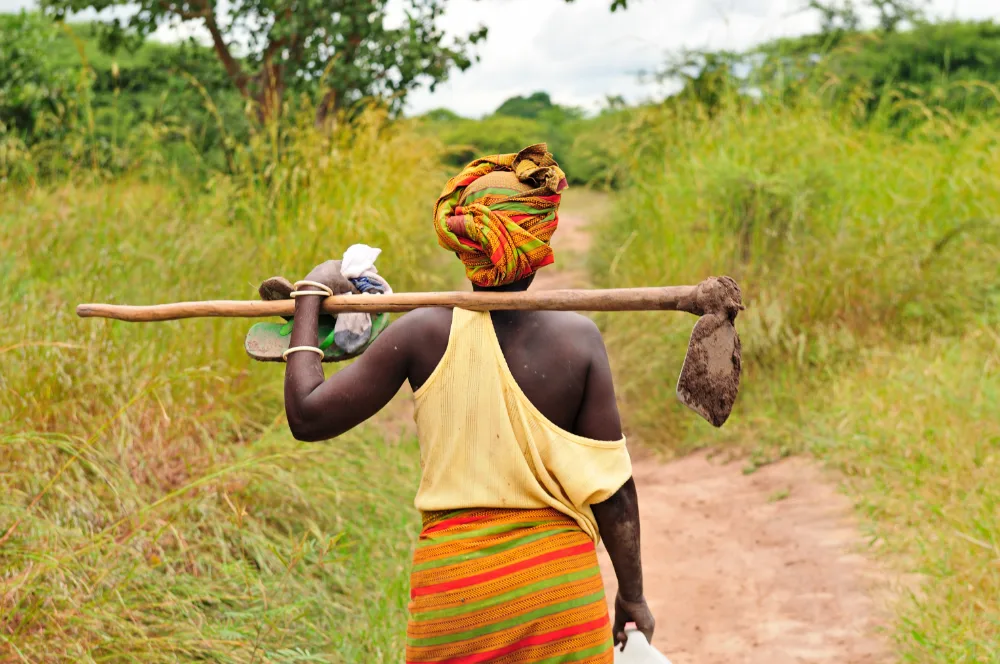
Gender-based violence (GBV) is both pervasive and invisible. Globally, one in three women has experienced physical and/or sexual violence in their lifetime. In food systems, unequal power dynamics and intertwined land, social and economic inequalities constrain women whose agricultural work sustains communities worldwide.
These power imbalances normalise violence, coercion, economic abuse, and harassment of women agricultural workers, rendering abuse ‘unspeakable’, especially when reporting mistreatment can mean risking their livelihood. However, the link between GBV and food systems remains poorly understood. In this article, we ask whether the challenge stems not only from limited data, but also from the methodological constraints and assumptions in how GBV is studied and ‘measured’.
What is GBV and how is it related to food systems?
The FAO defines GBV as ‘harmful acts directed against a man, woman, boy or girl, and gender non-conforming people’, rooted in gender inequality, discriminatory norms, and unequal power dynamics. It includes ‘physical, sexual, economic, emotional and psychological abuse, harmful practices and the denial of essential resources and services.’ USAID adds legal and political violence, noting it is not just the ‘use’ of violence but also the ‘threat’ that constitutes GBV. Violence can further be exacerbated when gender intersects with inequalities such as age, class, education levels and location (urban/rural).
GBV is therefore both structural and situational, shaped by cultural, political and economic factors alongside inter-personal, community and local environmental factors. Beyond domestic or intimate partner violence (IPV), which is often the focus of research, GBV is found across all spheres of society, permeating the psycho-social and somatic dimensions of people’s lives in ways less visible than physical or economic violence, for instance.
Within food and agriculture, violence can become normalised in a functioning global food system. As Dr Lora Forsythe, Associate Professor of gender, inequalities and food systems at NRI, highlights, ‘expressions of power and control are part of how food is produced, processed, sold, distributed and consumed, from household to global levels. This is illustrated by the use of and dependency on precarious and exploitative labour practices, for example, which increase GBV risk.’
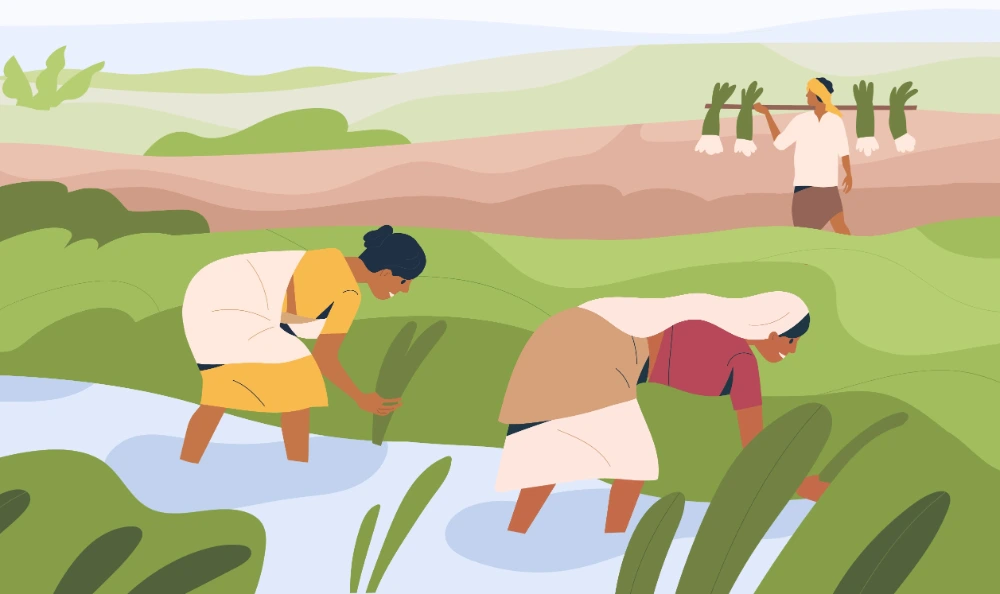
While decolonial and feminist research is increasingly exploring these often hidden but everyday complexes of violence, GBV’s deeply psycho-social nature, constituted by complex interactions between affective states, embodied experience, cultural norms and social relationships, raises a vital question: which research methods are both suitable and ethical?
Somatic-informed research: a new approach
Much development literature frames GBV economically, reducing a complex, relational and embodied phenomenon to individualised, quantifiable cases – implying it is fully ‘knowable’ through existing social science methods such as interviews, life histories or surveys. These traditional talking-based methods are undoubtedly important, but risk re-traumatising participants and might miss the affective dimensions of GBV, limiting understanding of the persistence and pervasiveness of violence, as well as opportunities for transformative change.
To address these ethical and epistemological concerns, the transdisciplinary research project – Hitting the Ground – funded by the UK Arts and Humanities Council, co-developed an arts-based, trauma-informed, survivor-centred methodology with communities. Bringing together NRI, the Corporación de Investigación y Acción Social y Económica (CIASE), the Women’s Aid Collective (WACOL), somatic practitioner and anthropologist Paula Ramírez Diazgranados and the University of Plymouth, the team held workshops with women cassava labourers, farmers, processors and traders in Nigeria and women rice labourers and farmers in Colombia. In these contexts, these crops occupy important cultural and socio-economic positions in society, as key staples in the communities where they are grown and are often promoted in government policy. Now in its final phase, the project is asking what kinds of ‘data’ constitute evidence when studying GBV to initiate change in policy and practice and, what somatic and creativity-centred approaches can bring to both GBV and food systems research.
These workshops prioritised the overlooked embodied dimensions of women’s lives as food producers, processors and traders. Researchers participated in the creative and somatic activities, alongside women workers, who were invited to shape the research agenda and discuss subsequent actions to benefit them.
Importantly, the workshops became spaces of rest and expression. The women co-created ‘safe enough spaces’ where they explored a range of emotions and perspectives on the challenges and the joys of living from and with the land. Combining working with clay, storytelling through crafting and drawing, with trauma-sensitive breathing exercises, stretching, and rest, the project has developed a new body-story-environment approach to explore women’s experiences as workers in the food system.
Unlike traditional social science methods, the project attempts to explore collective and embodied notions of GBV in food systems, both as experience and as a social condition amid wider conflicts. This enables both a co-created process to develop new relational methods and concepts and to illuminate the structural factors and the situated, intersectional iterations of violence in everyday life.
Legibility of somatic experience
Somatic, affective and embodied dynamics of GBV in food systems are fundamentally connected to ecologies, society and power. This project used methods that treated these elements as interconnected and crucial in creating spaces for collective action. Pairing such feminist inquiry with empirical evidence is necessary for institutional accountability, policy reform, and tangible protections that can transform survivors' lived realities into safe, equitable agricultural environments. However, persuading policymakers used to quantifiable data to listen to the ‘unsayable’ is challenging – yet vital.