

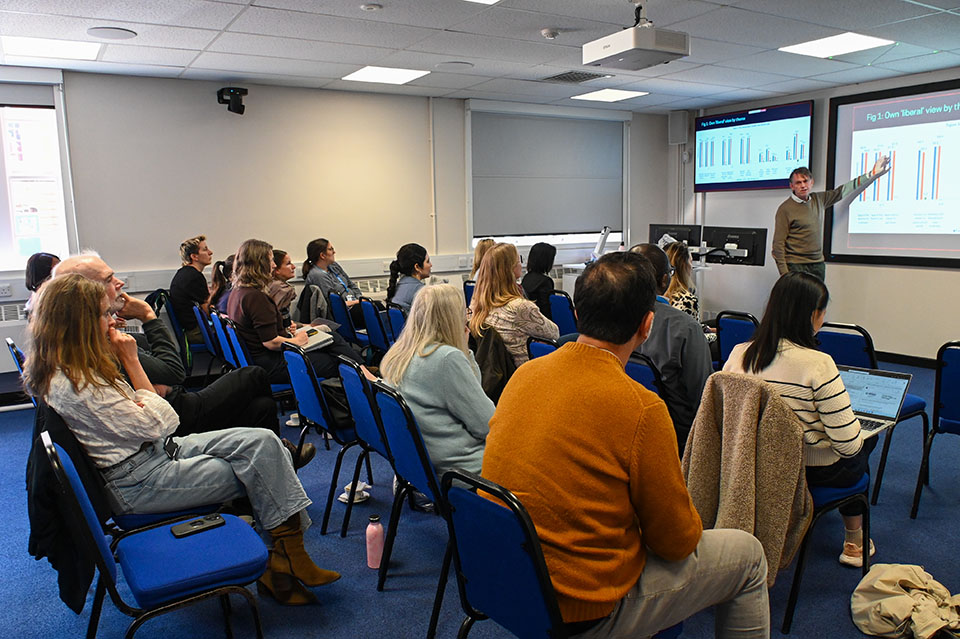
Researchers, development partners and practitioners came together at NRI for the 2026 Gender and Social Difference (GSD) Research Day, hosted by NRI’s GSD Research Group, to explore how cutting-edge research can translate into meaningful, real-world impact.
The event featured presentations and student research posters, bringing together academics, policymakers and practitioners to explore how gender-transformative research can address some of today’s most pressing global challenges, cutting across food systems and nutrition, workplace equity and gender-based violence.
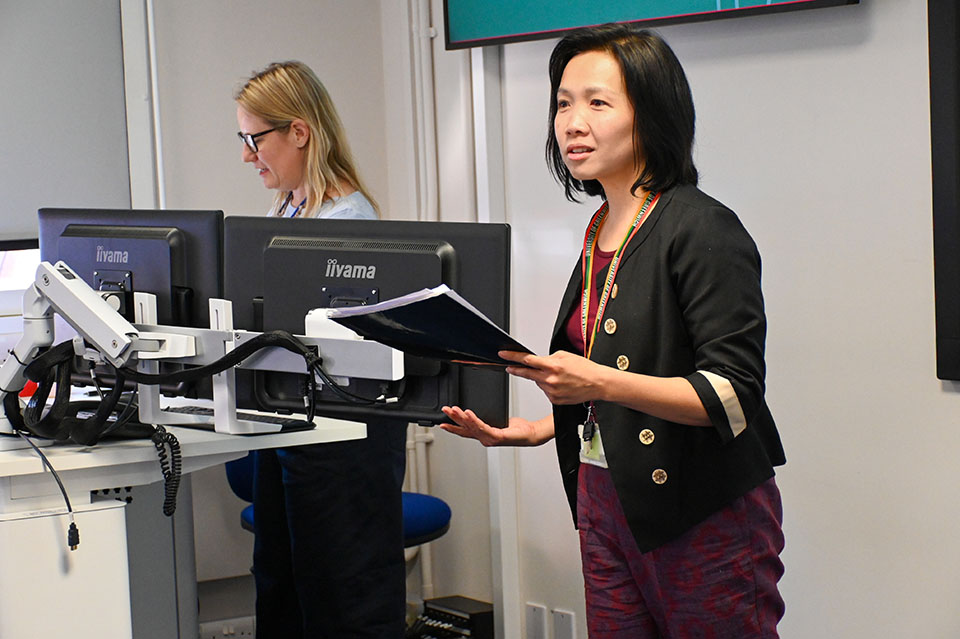
A key highlight of the day was the presentation by Dr Lora Forsythe and Dr June Po, of findings from The Status of Women in Agrifood Systems in Sub-Saharan Africa, a major report developed by NRI, the FAO, and the African Women in Agricultural Research and Development (AWARD). Recently launched at the 34th FAO Regional Conference for Africa in Nouakchott, Mauritania, the report provides new insights into women’s work, food security and nutrition status, resilience and progress e in agrifood systems. It also highlights the structural barriers that continue to shape access to resources, innovation and opportunities.
Throughout the day, speakers shared new research and evidence from across diverse global contexts:
The keynote speaker, Dr Karmini Sharma (Imperial College London), explored the systemic barriers to creating safe environments for women in workplaces and educational institutions. Grounding her insights in rigorous experimental field research from India, she unpacked the complex economic and social drivers behind gender segregation, discrimination, and sexual harassment.
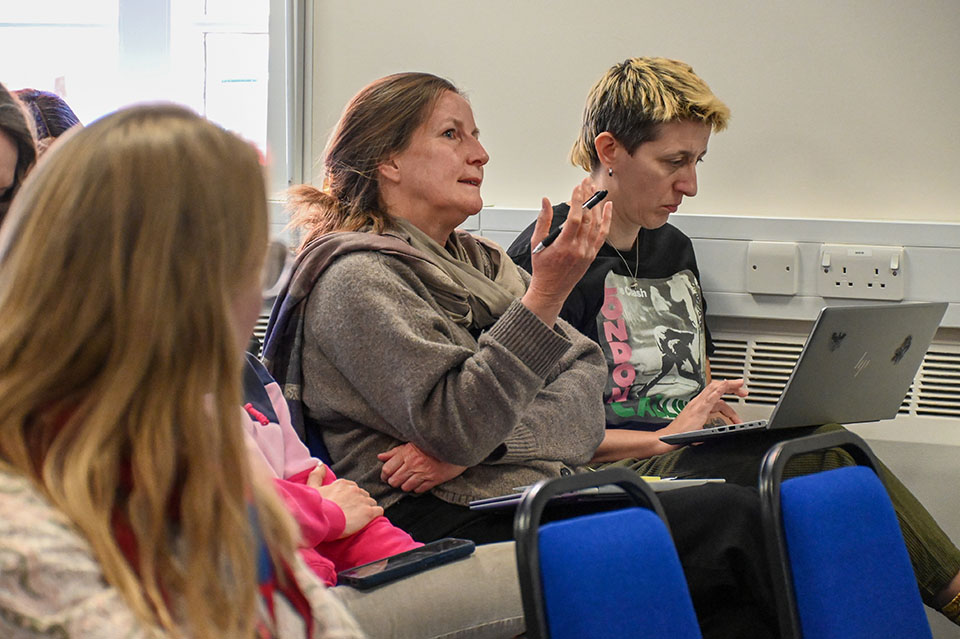
Following the keynote, Vegard Iversen, Professor of Development Economics at NRI, challenged the recent and increasingly influential finding that gender-regressive practices can be fixed simply by correcting community misperceptions. Drawing on two large experimental and household survey datasets from rural Bangladesh, his research with colleagues from the International Initiative for Impact Evaluation (3ie), Potsdam Institute for Climate Impact Research and NRI, shows that local support for women’s autonomy – including paid work outside the home and freedom of movement – is conditional on the type and location of the work. He cautioned that simple "belief correction" is not a silver bullet, highlighting the need for nuanced, context-sensitive and evidence-based policy interventions.
Dr Lora Forsythe, Associate Professor in Gender, Inequalities and Food Systems at NRI, discussed applications of innovative, somatic, and arts-based research methods to explore gender-based violence in the Nigerian cassava and Colombian rice sectors. Her research findings resonated with scholars and practitioners, uncovering the often unspoken connections among self- and collective-expressions, agency, women’s work and gendered violence in agricultural fields and food markets, and economic and environmental injustice.
Highlighting the need for systemic solutions to malnutrition, Dr Lydia O’Meara (Cornell University) and a PhD graduate from NRI, presented the results of a systematic review – part of her doctoral research – that presents the first empirically grounded conceptual framework of women’s food environments in low- and middle-income countries (LMICs). The framework is a useful tool for designing more effective interventions that go beyond surface-level solutions towards addressing the underlying determinants of women’s malnutrition.
Bringing a critical funder and policy perspective to the discussions, Charlotte Bailey, Advisor in the UK Foreign, Commonwealth and Development Office (FCDO) Food and Agriculture Research Team, outlined current gender priorities and the evolving focus of international development agendas. Discussions on moving the often-narrow growth and cost-effectiveness agenda to wider social-ecological systemic challenges, showed promise of institutional change.
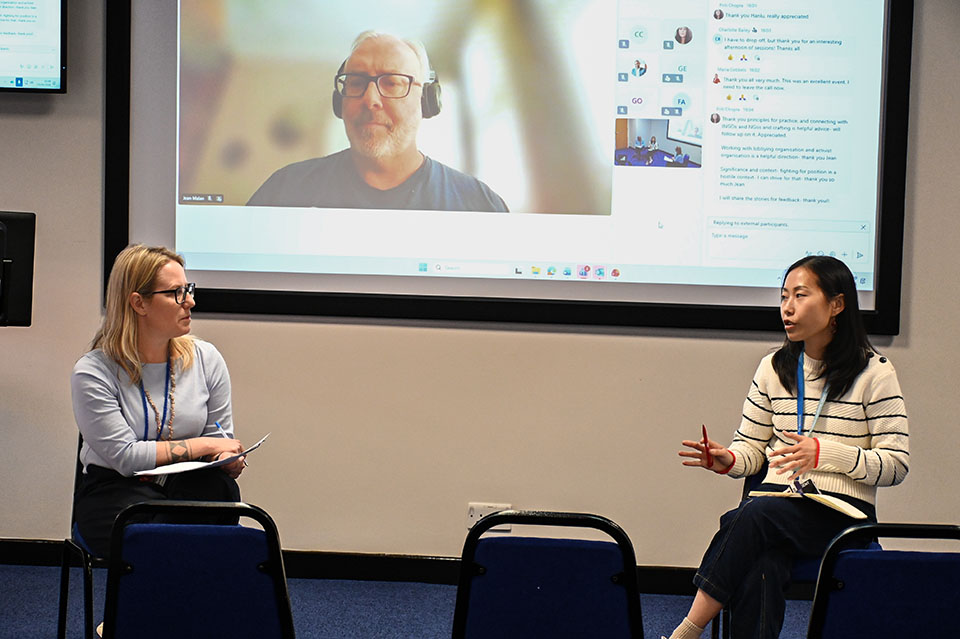
The day concluded with presentations from Junhanlu Zhang and Jean Malan from Greenwich Research and Innovation, on how to develop practical impact pathways and draw out synergies between equality, diversity and inclusive principles, and gender-just research approaches for equitable impact. These were followed by a dynamic panel discussion focused on translating this wealth of evidence into action. Professor Adrienne Martin (NRI) joined Zhang and Malan to unpack practical pathways and tools for driving equitable impact. The panel emphasised that creating real-world change relies heavily on building equitable partnerships from the outset of any research project, ensuring that local stakeholders are co-creators of knowledge.
The GSD Research Day convened interdisciplinary perspectives and showcased research from across regions and sectors, underlining the importance of collaboration in addressing deeply rooted inequalities. The event also highlighted NRI’s ongoing role in generating evidence that informs policy, strengthens practice, and supports more inclusive and sustainable development outcomes.
Dr June Po, who co-organised the event with Dr Forsythe, reflected: ‘The diversity of participants and the lively discussions at the Research Day give me a lot of hope that transdisciplinary knowledge exchange and intentional research impact are achievable. I am very proud that the research presented showed that gender-transformative approaches are generating rigorous evidence for positive societal change’.
In addition to the research evidence, the Research Day provided insights into the benefits of exchanging knowledge, supporting equitable partnerships, and sustained engagement with the systems, institutions and communities that research seeks to influence for lasting, transformative change.