

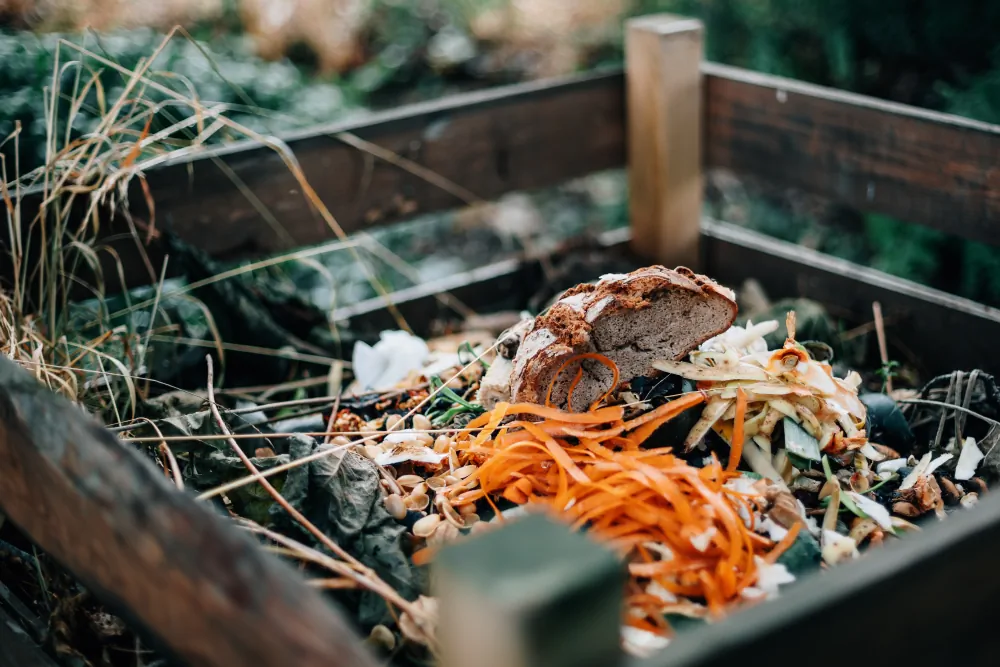
It is no longer news that, despite the land, water, seeds and other resources, the months of effort, the skills and care required to grow and produce our food, particularly in the face of increasingly unpredictable climates, a shocking proportion of it then gets lost or wasted as opposed to consumed.
Let’s take bread for example: research by the Waste and Resources Action Programme (WRAP) suggests that in the UK alone, 960 tonnes of bread, equivalent to 24 million slices or 1.2 million loaves, are disposed of every day. Globally, thousands of tonnes of bread are discarded every day, generating greenhouse gas emissions. These numbers are unsettling, especially when viewed in the context of a world in which 645 million people are estimated to have faced hunger in 2025. At the same time, human activities have led to seven out of nine planetary boundaries – scientifically determined limits that ensure the earth’s health – being exceeded. Bread is by no means the only food that gets wasted in households, it occurs alongside the loss and wastage of many other foods. However, the significance of bread, in its many forms, extends across diverse food cultures worldwide.
Following a review of the existing literature, Manthan Punitbhai Prabtani, a current MSc student on the Food Safety and Quality Management programme explored why households waste bread, whether the reasons for bread waste differ between the UK and India, and what suggestions households have for reducing bread waste.
His survey data found that respondents in the UK mainly threw bread away because it had gone mouldy, stale or past the use-by-date. In India, they threw bread away because it had gone past its use-by-date, smelt off, had gone mouldy or stale. In the UK, bread was mainly stored in a kitchen cupboard or bread bin on the counter, while many of the Indian respondents stored their bread in a fridge or a bread bin.
When asked about the reasons for this bread waste, respondents in both countries cited their pmore bread than needed. In the UK respondents explained the standard bread loaf size sold was very large but was often cheaper than the smaller loaves, leading to over purchasing and then waste, particularly in households of just 1 or 2 people. Refusal to eat the crusts or end slices was also mentioned as contributing to bread waste in the UK.
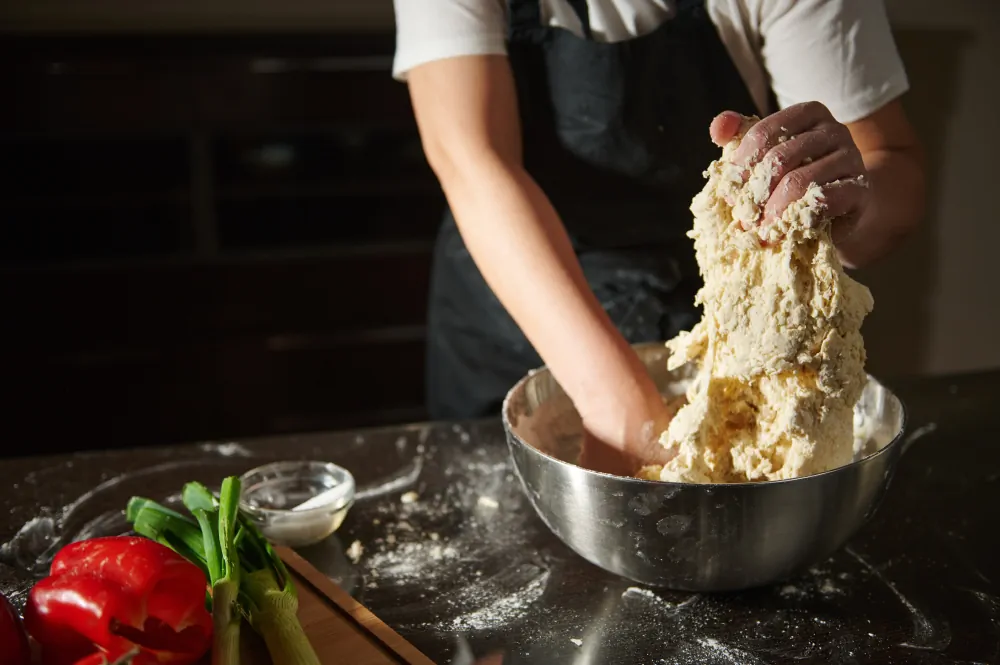
In households where bread was sometimes homemade they said it was less likely to be wasted than bread which they had purchased. This was because they could prepare the exact amount they needed using higher quality ingredients, and didn’t want to waste the time, labour and care invested in making it.
Respondents felt better bread buying behaviour, improved meal planning, freezing of excess bread, and upcycling leftovers into breadcrumbs, croutons or bread pudding could help avoid waste, alongside better pricing of smaller packs of bread, including half loaves, and use of digital freshness tracking apps.
Around half of respondents in the UK and India said they would be open to separating their bread waste if they knew the bread would be transformed into high-value products such as pharmaceuticals, food additives and biofuel. UK respondents suggested financial incentives for bread waste separation could include vouchers or tax discounts, while in India, they suggested provision of a free, specially designed, odour-proof bin. However, an interview with a UK council waste officer highlighted that current legislation aims ‘to simplify recycling’. The officer thought there would be low uptake of a separate household-level bread waste collection stream which would make it too expensive to manage.
Cases already exist in the UK where unsold or surplus bread is being separated and collected not from households but from bakers, caterers and retail businesses and used by specialised brewing businesses for producing a range of craft beers. Two examples include Toast Brewing and Crumbs Brewing. Among the Crumbs collection are products with names such as ‘Sourdough pale ale’ and ‘Naan lager’ – made from unsold bread or wonky naan bread respectively.
Several digital apps such as Too Good To Go, Olio and Karma now exist which aim to help in redistributing surplus food to reduce the quantity that gets wasted. Syamala Bellamkonda, a current MSc student on the Food Safety and Quality Management programme, has been exploring how using these food waste reduction apps affects food waste behaviours among UK consumers and what factors could support their long-term and wider use.
Most of the respondents of her survey had never used a food waste reduction app, but those that had often used several of them multiple times a week. They explained that the apps which provide access to surplus food at lower prices helped them to both save money and reduce food waste. The respondents said lower surplus food prices, participation by more stores that were near them, and improvements to app design would encourage more frequent and longer-term use of the apps.
Most of the food waste reduction app users reported that use of the apps had influenced their food purchasing habits, leading to them buying less food overall and planning their meals more carefully. Some reported their food storage habits, including organising their fridge to enable better visibility of the contents, regularly checking expiry dates, and storing their leftovers properly, had improved since using the apps. The most frequently reported problem with the apps was the often inconvenient pick-up times involved in collecting the surplus food.
Concerned about the environmental impacts of the food system, Hilary Ndogikoang Kantabuli, an MSc student on the Global Environmental Change programme, has been exploring how circular and social solidarity economy principles are already integrated in urban food systems in Ghana. Using case studies of market traders, chop bar/ restaurant owners and sorghum beer (pito) brewers in the Madina area of Accra, Ghana, he investigated what by-products their businesses produced and what happened to them.
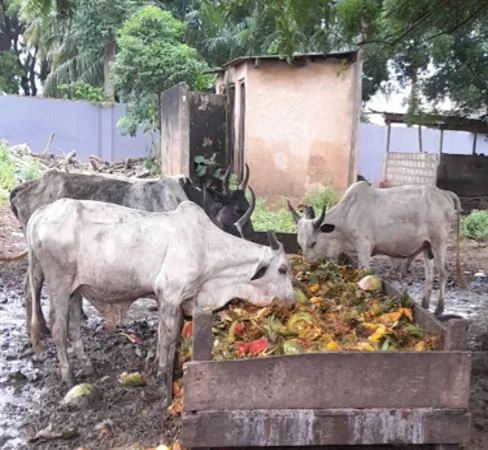
The interviews, conducted with the assistance of volunteer enumerator Isaac Bayou, explored how by-products produced by these traders and caterers’ activities, including cassava, plantain and fruit peels, cabbage outer leaves, maize husks and chaff and soaked grain from pito brewers, were collected and repurposed as livestock feed.
Many of these by-products were provided free of charge, enabling the producers to avoid disposal costs. In return, the collectors/by-product users often expressed their appreciation through gifts, frequently in the form of animal-derived food products. By-products from pito brewing were more commonly purchased, with livestock keepers explaining that their use reduced the amount of imported feed they then required. Some by-products were dried, chopped, mixed and stored for later use. Others were fed fresh to the animals. Interviews also reported occasional challenges associated with by-product spoilage and contamination. The manure produced by the livestock fed on these by-products was subsequently collected by crop farmers, reducing their need for imported inputs. Both women and men played active roles in these interconnected systems.
The exchanges that sustain these flows of locally embedded circularity, keeping organic by-products in productive use, are organised largely through informal, reciprocal and long-standing relationships. No direct formal institutional or policy support for by-product reuse was reported.
These findings highlight the importance of recognising and supporting the diversity of existing locally embedded circular and social solidarity practices, rather than attempting to impose one organisational model. Formalisation that is disconnected from local socioeconomic realities risks creating unnecessary over-regulation, generating conflict and unevenly distributing costs and benefits. The challenge, therefore, is not to replace what already works, but to strengthen and support existing practices while safeguarding the local relationships and trust that make effective material circulation possible.
These MSc students’ projects were supervised by NRI’s Prof. Tanya Stathers, and Hilary Ndogikoang Kantabuli’s project was co-supervised by Richard Lamboll.